
Last updated September 21, 2026
Full 25-point door and opener safety check with every visit - springs, cables, rollers, tracks, and your LiftMaster or Chamberlain opener included
You get a price before we start. It does not change when the truck arrives.
 Before
 After
After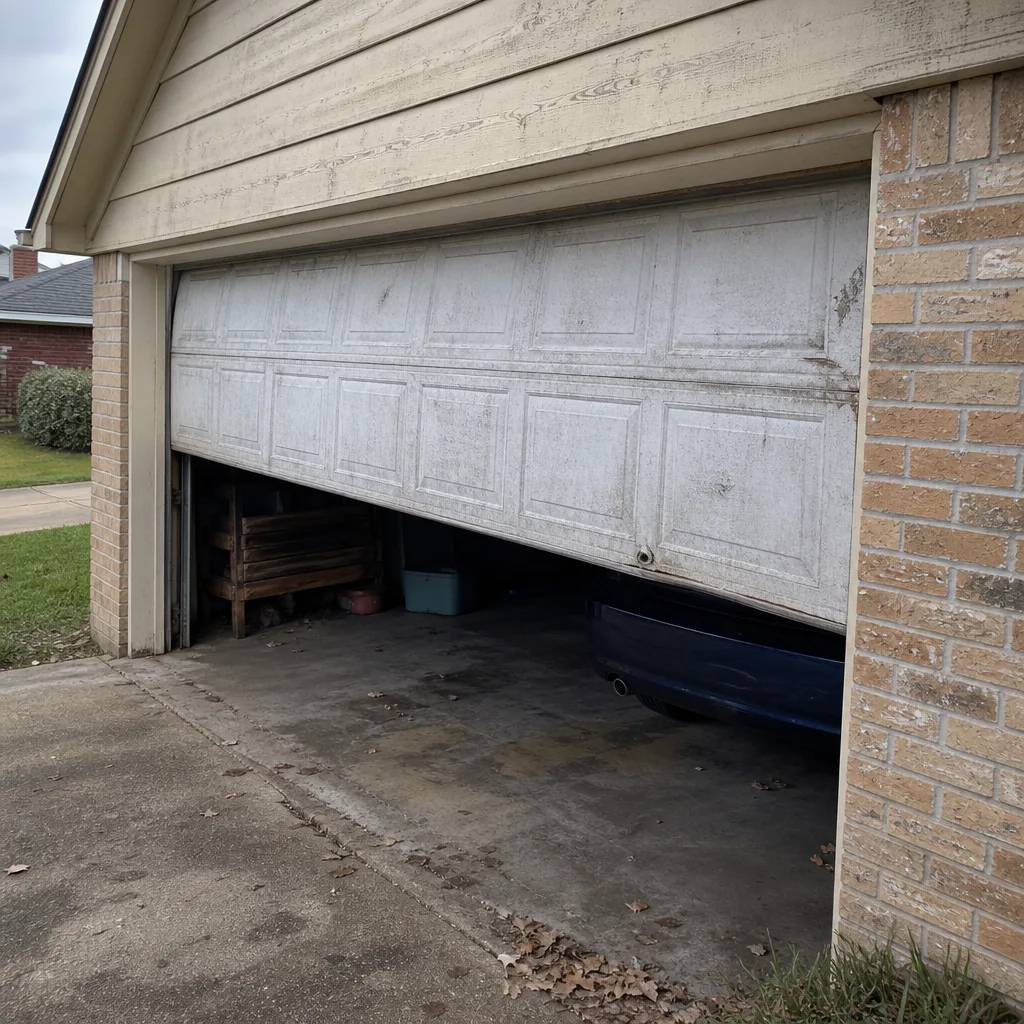 Before
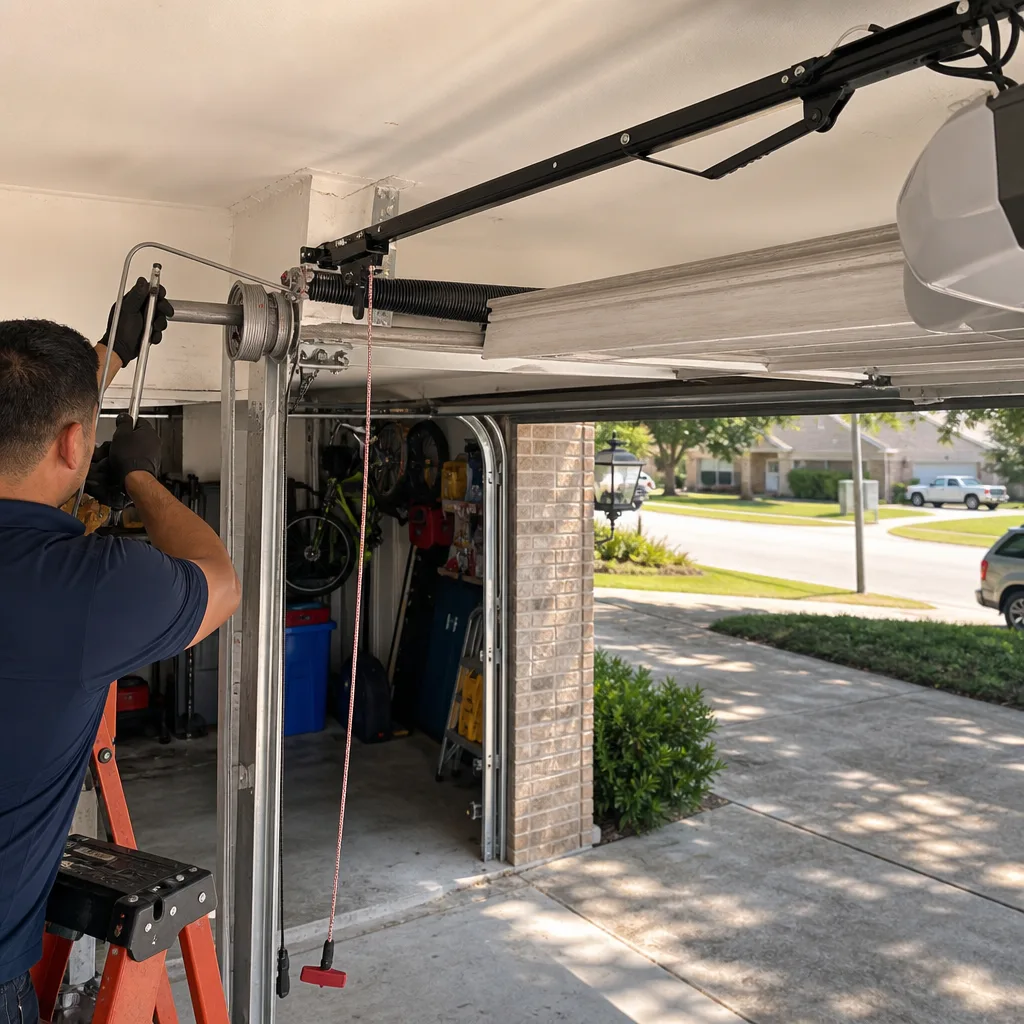 After
After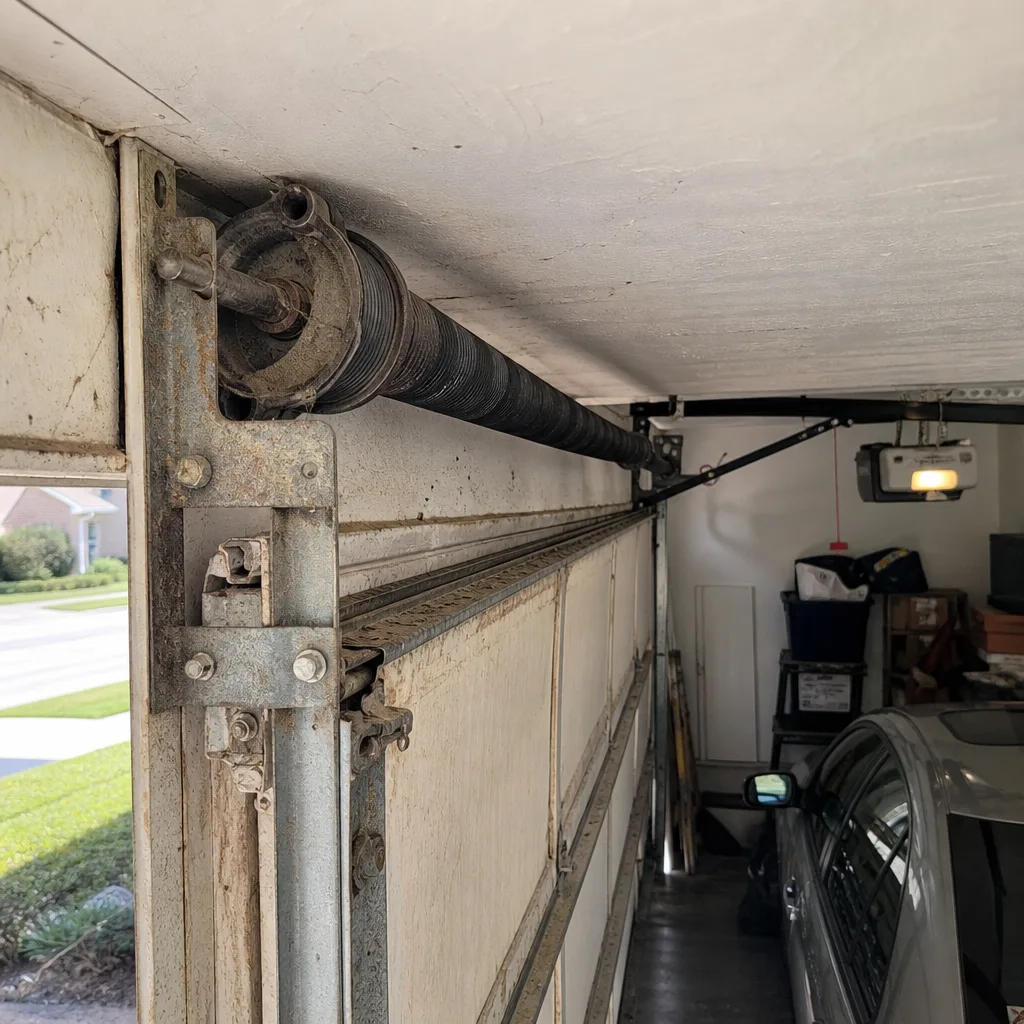 Before
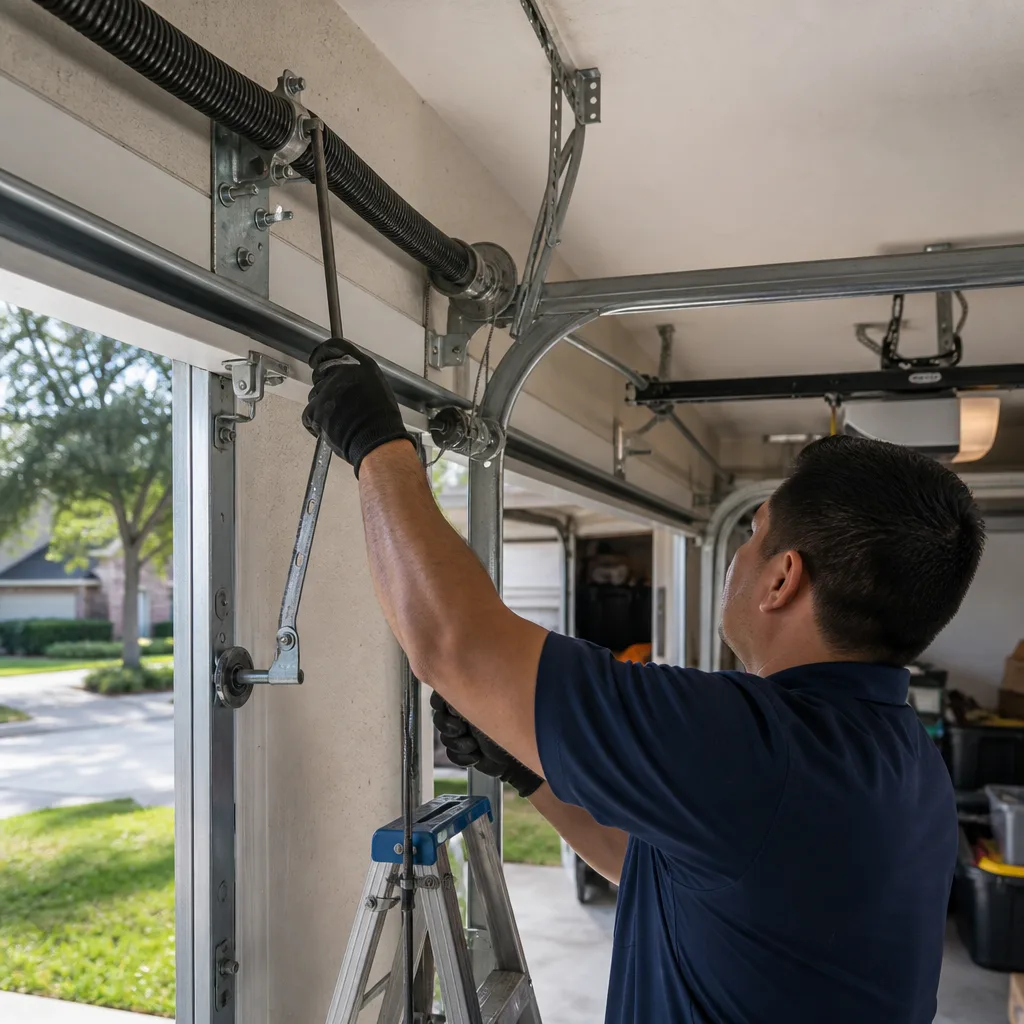 After
AfterHow to Hire a Garage Door Contractor in Tomball: A Step-by-Step Guide
A verbal quote has no legal weight in Texas home improvement disputes. If a contractor prices your torsion spring replacement over the phone and the invoice is 40% higher, your recourse is a civil suit - which costs more than the markup. In Tomball, where the humidity swings from March through October and garage door hardware takes a beating, the contractor you hire matters more than the brand on the door. This guide shows you how to audit a contractor’s documents before they touch your door, so you know exactly what you’re paying for and what you’ll receive when the job is done. For more guides & resources, see our blog.
Quick Answer
Hiring a garage door contractor in Tomball means verifying three documents (TDLR license, certificate of insurance, written scope of work), requesting a flat written price before any work starts, and asking whether the technician photographs the failed component before quoting a replacement. The contractor who hands you these documents without prompting is the contractor who’ll still be accountable after the truck leaves.
Table of Contents
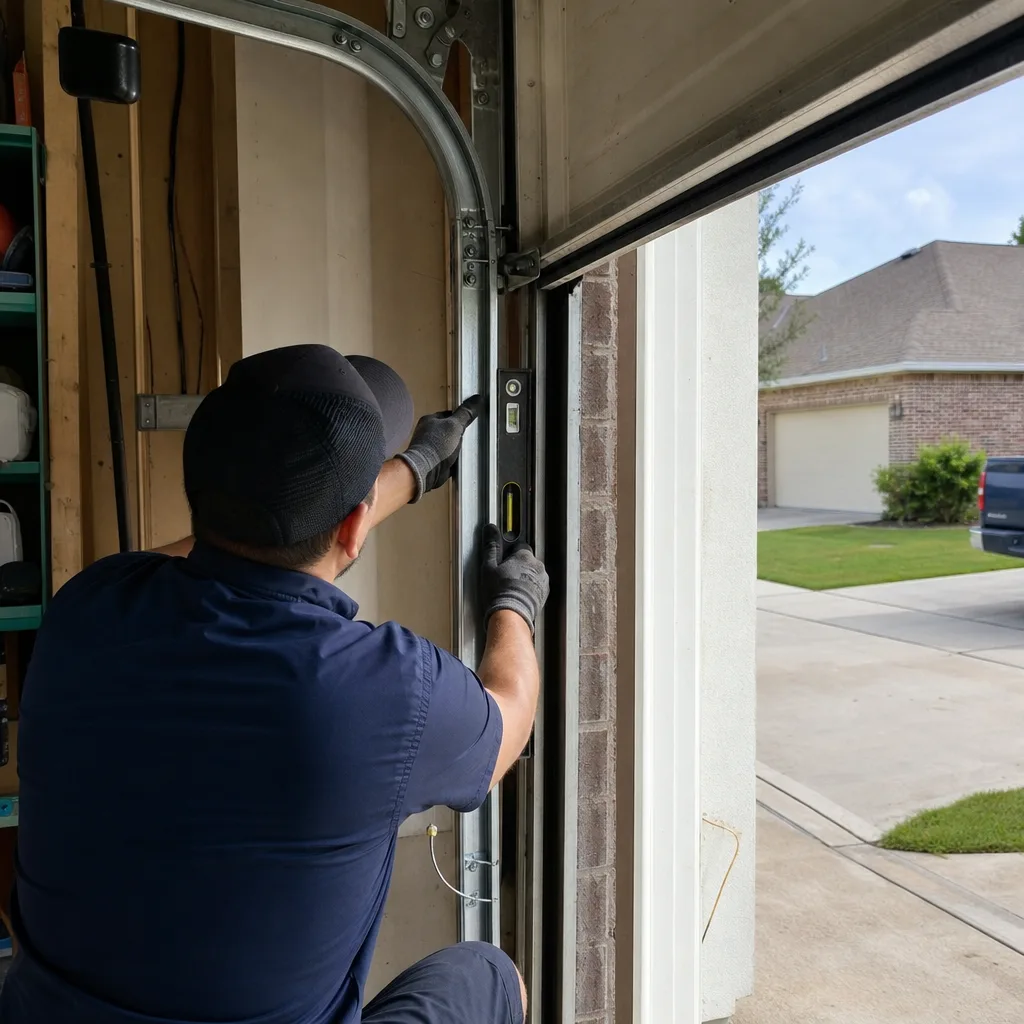
- How to Verify a Texas Garage Door Contractor’s License and Insurance
- What a Written Price-First System Actually Looks Like
- How to Read Quote Line Items to Spot Hidden Markups
- The One Question That Separates Documentation-First Contractors
- A Contractor Comparison Scorecard for Tomball Homeowners
- Tomball-Specific Factors That Affect Your Project
- Red Flags During the Hiring Process
- Common Mistakes to Avoid
- When to Call a Professional
- Frequently Asked Questions
- The Bottom Line
 Before
 After
AfterHow to Verify a Texas Garage Door Contractor’s License and Insurance
Texas requires garage door contractors to hold an active license through the Texas Department of Licensing and Regulation (TDLR). This isn’t optional, and it isn’t a formality. An unlicensed contractor working on your property creates liability that your homeowner’s policy may not cover if someone gets hurt or the work fails structurally.
The Three Documents to Request
- TDLR Contractor License - Ask for the license number. Verify it at tdlr.texas.gov in under three minutes. The search returns the license status (active, expired, suspended), the business name on file, and any disciplinary history. If the contractor hesitates or says the number is “being renewed,” stop. An active license is a live document, not a pending one.
- Certificate of Insurance - Request a certificate showing general liability coverage and workers’ compensation. The certificate should name the specific business entity, not a generic DBA. In Tomball, where many contractors operate out of personal vehicles with magnetic signs, this document separates a legitimate operation from a weekend operator. Call the insurance carrier to verify the policy is current; we’ve seen expired certificates presented as active.
- Written Scope of Work - This is not an estimate. A scope of work defines exactly what will be done, with what materials, to what standard. We’ll cover this in detail in the next section.
What TDLR Disciplinary History Tells You
A clean TDLR record isn’t a guarantee of quality work, but a record with multiple complaints is a pattern. Look specifically for:
- Violations related to unlicensed activity or subcontracting to unlicensed workers
- Consumer complaints resolved with refunds or corrective orders
- Recent disciplinary actions, which suggest current operational problems, not historical ones
In our experience serving Tomball since 2015, the contractors who balk at document requests are the same ones who price verbally and invoice higher. There’s no coincidence there.
What a Written Price-First System Actually Looks Like
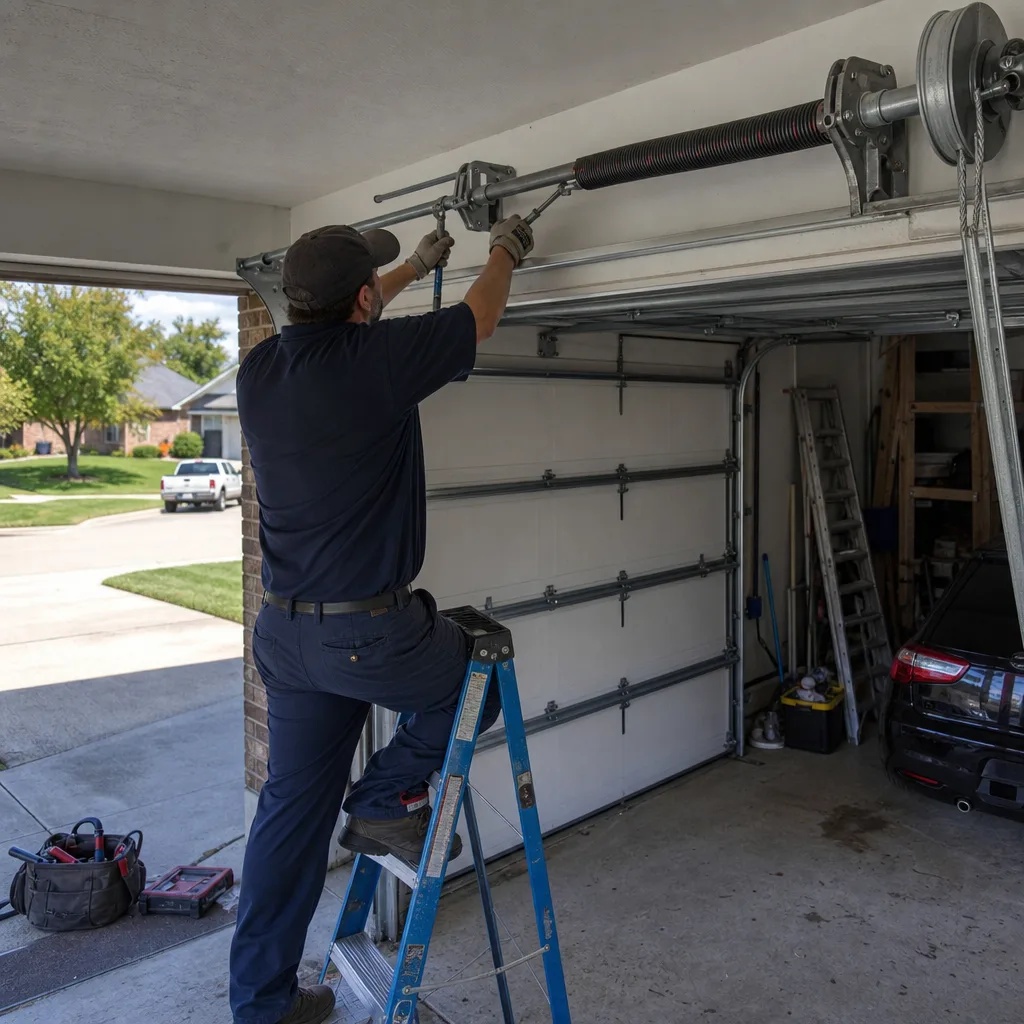
Most contractors say they “give estimates.” Fewer will hand you a flat, written price with a written scope before any work begins. The difference matters legally and financially.
An estimate is a guess. It typically includes language like “subject to change upon inspection” or “actual cost may vary.” In Texas, an estimate is not a binding contract term unless it explicitly says so. A flat written price with scope is a fixed agreement: this work, these materials, this total, period.
The Exact Format That Protects You
When we arrive at a Tomball home, the technician delivers a document with these elements before touching any tool:
- Line-item description of the failure - “Torsion spring, 0.25-inch wire diameter, 2-inch inside diameter, 24-inch length, clean break at coil 12” - not “broken spring”
- Photograph of the failed component - Clause 4 of The Haven Standard requires this; the customer sees what we saw
- Replacement part specification - Brand, model, cycle rating (typically 10,000 cycles for standard, 25,000+ for high-cycle in Tomball’s heavy-use households)
- Labor description - “Remove failed torsion spring, install replacement, balance door, test safety reversal, lubricate hardware”
- Total price - One number, inclusive of parts, labor, and tax
- Signature lines - Customer approves before work proceeds; technician signs confirming scope
This is Clause 1 of The Haven Standard: written price before any work starts, no exceptions. If a contractor tells you they “need to start the repair to know the full cost,” you’re not getting a written price system. You’re getting an open invoice.
Why Phone Quotes Fail
We don’t give repair quotes over the phone. Not because we’re difficult, but because a torsion spring and a torsion spring are not the same part. Wire diameter, inside diameter, wind direction, and cycle rating all affect price and longevity. A phone quote guesses at these variables, then adjusts upward on site. The customer feels trapped. We’ve cleaned up after this scenario in Tomball neighborhoods from Creekside Park to Willow Creek, where homeowners called us second after a verbal quote ballooned.
How to Read Quote Line Items to Spot Hidden Markups
Even written quotes conceal markup strategies if you don’t know the line-item patterns. Here are the three most common in garage door repair, and how to identify them.
Pattern 1: Bundled Labor with Vague Descriptions
Watch for: “Spring replacement labor - $189” with no breakdown of what the labor includes. This bundling conceals whether the labor rate is $75/hour or $150/hour, and whether the job takes one hour or two. A legitimate scope specifies the labor tasks: remove, install, balance, test, lubricate.
Pattern 2: “Service Call” or “Trip Charge” Listed Separately
A service call fee of $59-$99, plus parts, plus labor, creates a three-part bill that looks smaller than it is. Ask whether the service call is waived if you proceed with the repair. At Servo Garage Doors Tomball home, we don’t charge a separate trip fee; it’s included in the flat price or it doesn’t exist.
Pattern 3: Generic Part Descriptions with Premium Pricing
“Premium spring - $240” tells you nothing. A legitimate quote specifies: “Clopay EZ-SET torsion spring, 10,000-cycle rating” or “Amarr high-cycle spring, 25,000-cycle rating, galvanized finish.” The generic description lets the contractor install whatever’s in the truck and price it as premium.
A Sample Comparison
| Line Item | Contractor A (Vague) | Contractor B (Specific) |
|---|---|---|
| Spring | Replacement spring - $220 | 0.250 x 2.00 x 24.00 LH torsion spring, 10K cycle, galvanized - $89 |
| Labor | Install labor - $175 | Remove failed spring, install replacement, balance door, test safety systems, lubricate - $140 |
| Service Call | Trip charge - $79 | Included in flat price - $0 |
| Total | $474 | $229 |
The specific quote isn’t always cheaper. But it’s always more honest, and it gives you a document to compare against competitors. That’s the point.
The One Question That Separates Documentation-First Contractors
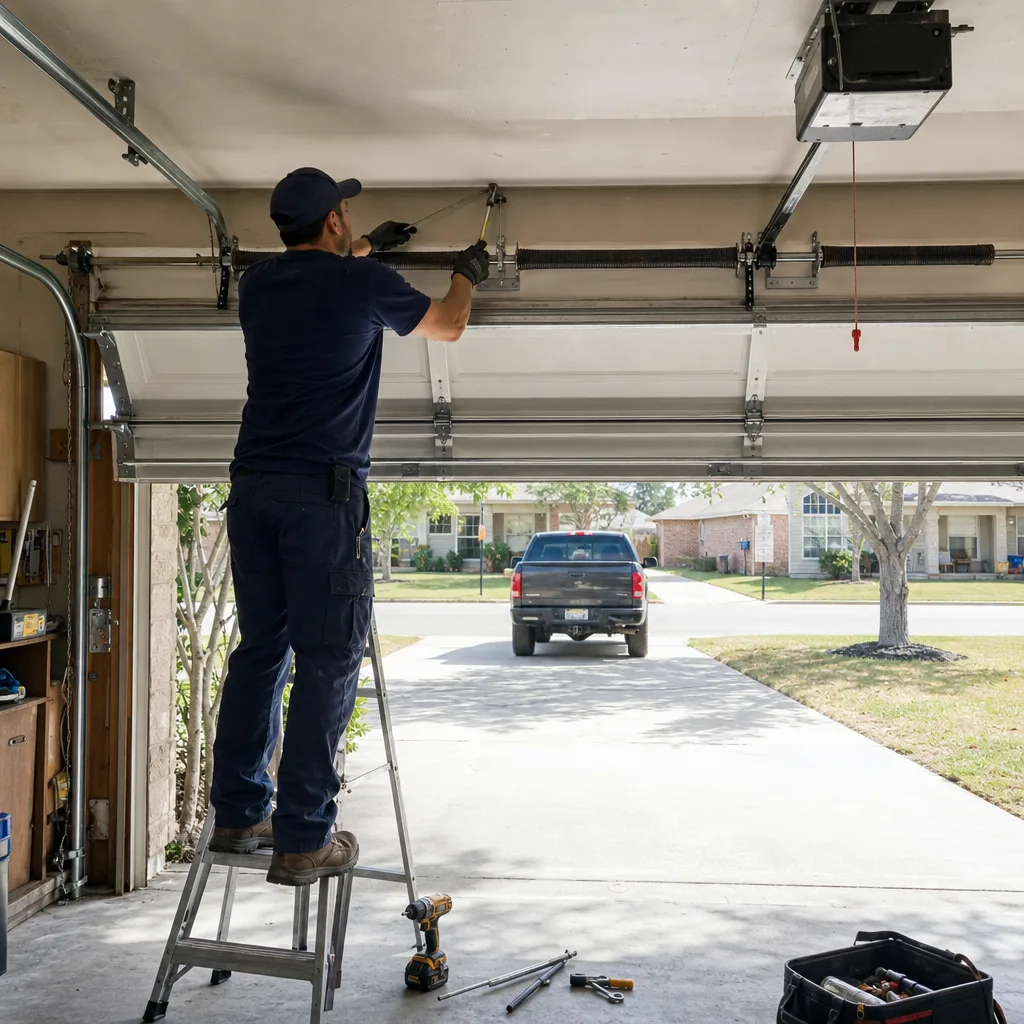
Ask this before scheduling: “Will the technician photograph the failed component before quoting a replacement?”
The answer tells you everything about the contractor’s operational DNA.
A contractor who says “we can do that if you want” doesn’t have a system. They have an optional courtesy. A contractor who says “our technician documents every visit with photographs of findings and completed work, delivered to you before the truck leaves” has a standard. That’s Clause 4 of The Haven Standard, and it’s how we’ve operated since 2015.
What the Photo Record Should Include
- The failed component in place, before removal
- Close-up showing the specific failure mode (fatigue crack, corrosion pitting, cable fraying)
- The new component, with visible part numbers or specifications
- The completed installation, showing proper alignment and hardware torque settings
- A timestamp or service record number linking to your invoice
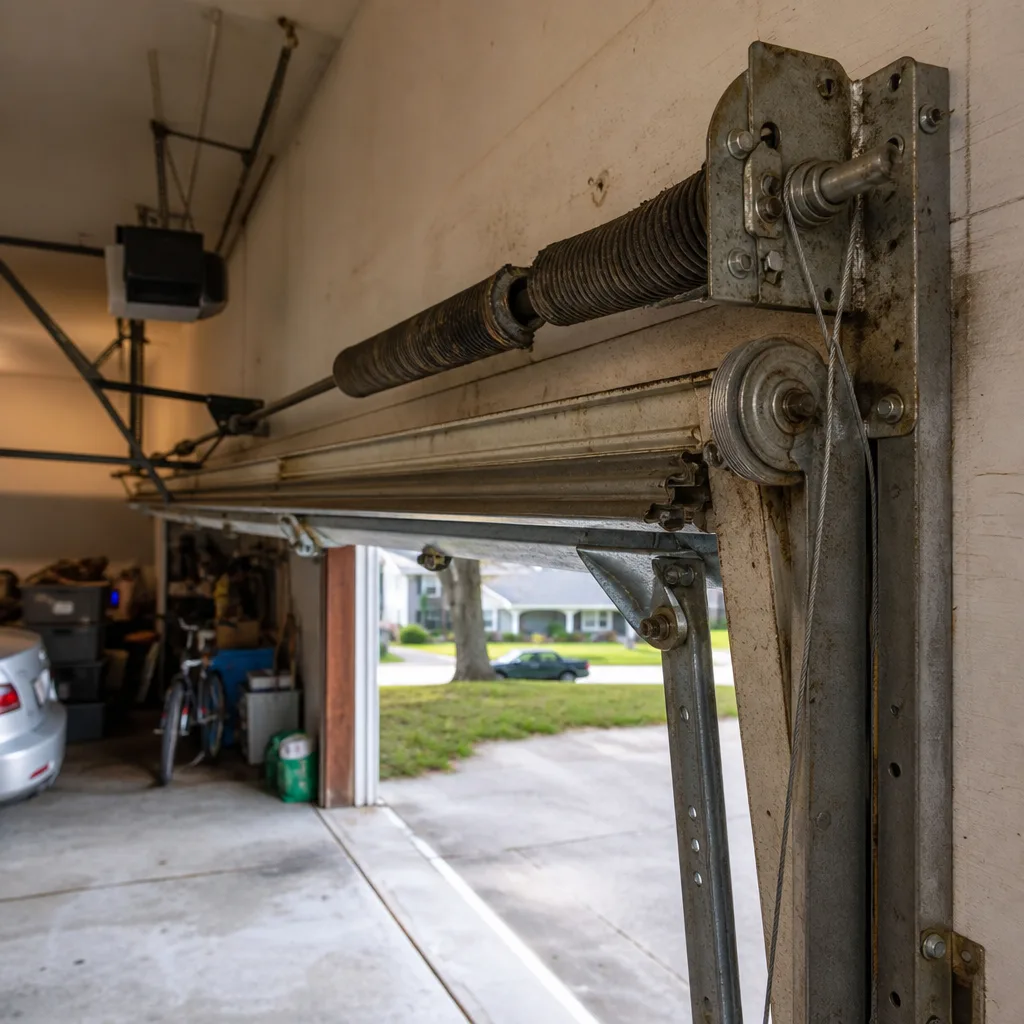
In Tomball’s humid climate, we regularly see spring corrosion that looks like simple wear until photographed at close range. The photo record protects both parties: the customer sees why replacement was necessary, and the contractor has documentation if questions arise later.
The contractor who can’t or won’t produce this record is asking for trust without evidence. In our experience, that’s when problems start.
A Contractor Comparison Scorecard for Tomball Homeowners
Star ratings aggregate emotion. This scorecard weights verifiable operational facts. Score each contractor 0-3 points per category. A contractor scoring below 12 should prompt serious questions.
| Category | 0 Points | 1 Point | 2 Points | 3 Points |
|---|---|---|---|---|
| TDLR License Verification | Refuses or deflects | Provides number, unverified | Provides number, customer verifies | License verified, no disciplinary history |
| Insurance Certificate | None offered | Verbal claim only | Certificate provided | Certificate provided, carrier verified |
| Pricing Format | Verbal only | Written estimate, non-binding | Written quote, some binding language | Flat written price + scope, signed before work |
| Part Specification | “Standard spring” | Generic size (e.g., “2-inch spring”) | Brand + basic specs | Full specs: wire gauge, ID, length, cycle rating, finish |
| Photo Documentation | Not mentioned | Available on request | Standard on most jobs | Required on every visit, delivered to customer |
| Warranty Documentation | Verbal (“we guarantee it”) | Short written note | Written warranty, limited terms | Written warranty with clear terms, claim process, duration |
| Response Communication | Voicemail or callback window | Text confirmation only | Live answer + technician name | Live answer, named technician, on-the-way text with ETA |
| Local Operational History | No verifiable presence | Less than 2 years | 2-5 years, some local references | 5+ years, documented local work history |
A score of 18-24 indicates a contractor with documented systems and accountability. Below 12 suggests you’re trading price certainty for risk. In Tomball’s competitive market, we’ve seen homeowners choose a 9-point contractor based on a $40 difference, then pay $300 more on the final invoice.
Tomball-Specific Factors That Affect Your Project
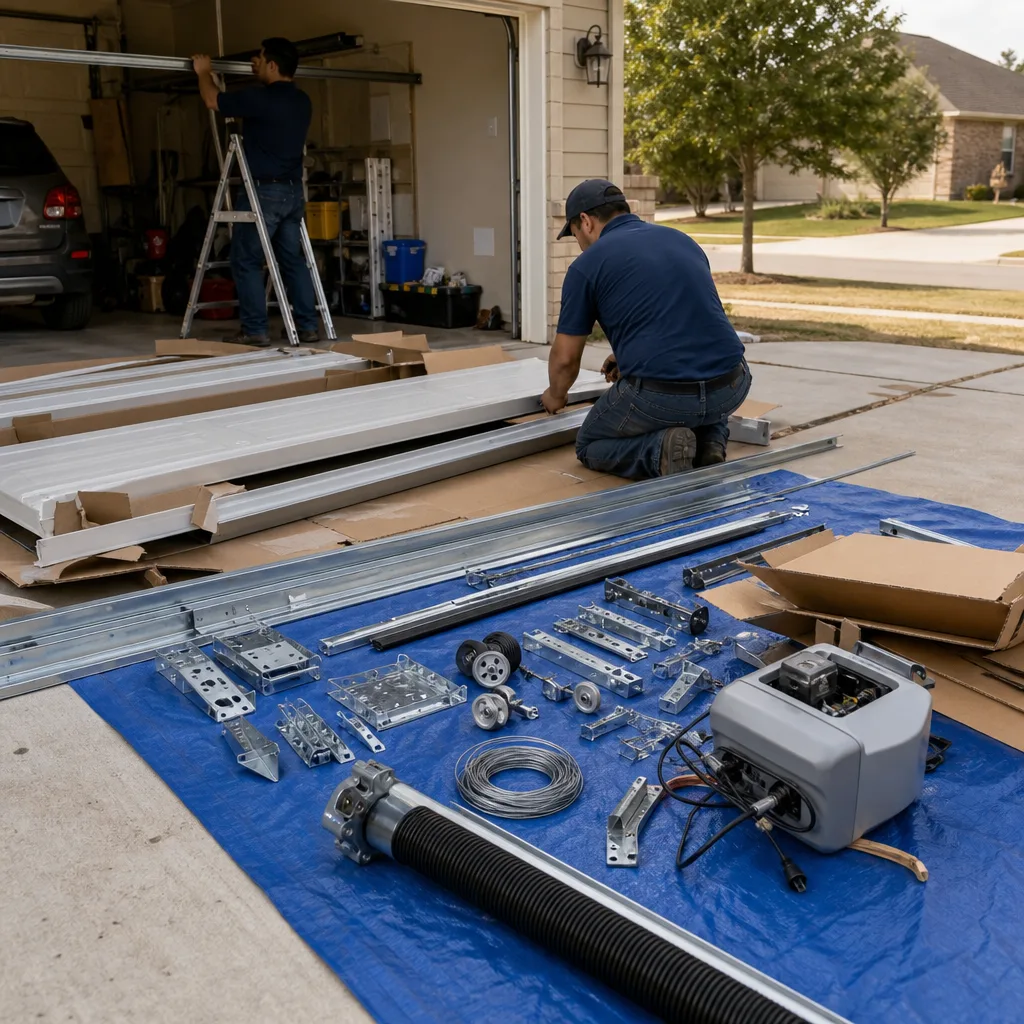
Tomball isn’t Houston, and it isn’t Cypress. The local conditions create specific considerations for garage door work, which we cover in our Seasonal Garage Door Care for Tomball: Year-Round Homeowner’s Guide.
Climate and Hardware Wear
Tomball sits in a humid subtropical zone with average annual rainfall above 48 inches. From March through October, humidity regularly exceeds 75%. For garage door hardware, this means:
- Torsion springs corrode faster than in drier climates, particularly in homes without climate-controlled garages
- Steel rollers develop pitting that accelerates track wear
- Wooden doors (common in Tomball’s older neighborhoods near downtown) swell and contract, stressing hinge points
- Logic boards in openers fail more frequently from humidity infiltration, especially in non-insulated garages
A contractor who doesn’t mention humidity-specific recommendations - galvanized springs, sealed bearing rollers, or humidity-rated openers - isn’t thinking about your door’s environment.
Neighborhood Construction Patterns
In Creekside Park and the newer developments along FM 2920, most homes built 2015-2025 have standard 16×7 or 18×8 steel doors with chain-drive openers. These are straightforward repairs with predictable part availability. In the older neighborhoods south of Main Street, we see more custom wood doors, carriage-house styles, and retrofit situations where modern openers mount to non-standard header configurations. The contractor should ask about your home’s age and door type before arriving, not discover it on site.
Permit Requirements
Tomball requires permits for new garage door installations but not for like-for-like replacements or repairs. If you’re converting a carport, changing door dimensions, or installing a new opener where none existed, your contractor should handle permit application. Ask who pulls the permit and who schedules inspection. A contractor who says “you don’t need one” without verifying the scope is guessing, and the guess could cost you a stop-work order.
Wind Load Considerations
While Tomball is inland, it’s within Harris County’s wind-borne debris region for building code purposes. New installations must meet ASCE 7 wind load requirements. A contractor quoting a new door should specify the wind load rating - typically 20 PSF for inland Tomball, higher for exposed locations. This isn’t upselling; it’s code compliance.
Red Flags During the Hiring Process
These aren’t annoyances. They’re predictors of the experience you’ll have after the truck arrives.
- “We need to start work to know the full cost.” This contradicts every principle of written pricing. The cost is knowable before work starts; the contractor just prefers not to commit.
- Pressure to decide immediately. “This price is only good while I’m here” or “I have another call waiting” creates artificial urgency. Your door has been broken for hours or days; another hour to compare quotes won’t change the repair.
- No physical business address. A PO box or residential address on documents suggests no permanent operation. Verify the address on the TDLR license matches a commercial location.
- Payment required before work completion. Standard practice is payment upon completion, after you’ve inspected the work. Large deposits for parts are unusual for standard repairs; the contractor should carry inventory.
- Vague warranty language. “Lifetime warranty” without defining whose lifetime, what components, and the claim process is marketing, not protection. Our 365-Day Done Right Promise specifies: if it’s not right, we make it right, with a terms page, not a handshake.
- No mention of safety systems testing. Every garage door repair or installation should include testing of the auto-reverse mechanism, photo-eye alignment, and force settings. A contractor who doesn’t list this isn’t finishing the job.
Common Mistakes to Avoid
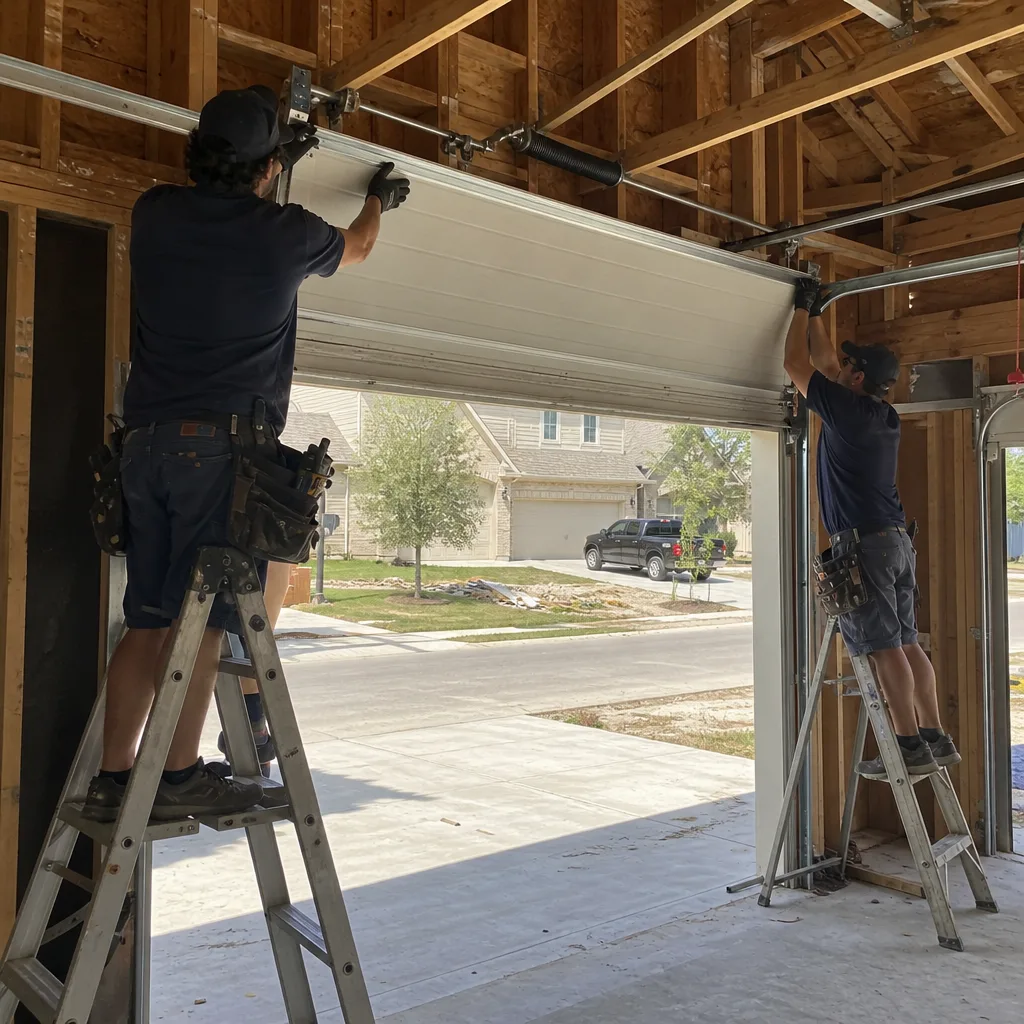
- Choosing by price alone. The lowest quote often omits scope the others include, or uses non-galvanized springs that fail in 18 months in Tomball’s humidity. Compare line items, not totals.
- Not verifying the TDLR license yourself. A contractor can recite a number that sounds official. The three-minute check at tdlr.texas.gov is the only verification that counts.
- Accepting a phone quote as binding. In Texas, verbal agreements for home improvement are enforceable but practically unprovable. Get it in writing, signed, before work starts.
- Ignoring the technician’s appearance and vehicle. Background-checked, uniformed technicians in marked vehicles correlate with documented operations. The unmarked truck with a magnetic sign is a contractor who can disappear tomorrow.
- Not asking about part brands. A Genie opener and a Chamberlain opener are not interchangeable at the same price point. The quote should specify which you’ll receive.
- Skipping the photo documentation request. Even if you don’t understand the part, the photograph proves the technician examined it. No photo, no proof of diagnosis.
- Hiring based on “same day” speed for non-emergencies. Speed matters for a door stuck open with valuables exposed. For a noisy opener or slow response, measured scheduling beats rushed work.
When to Call a Professional
Some situations tolerate DIY investigation. Others don’t, and the distinction matters for safety.
Call a professional immediately if: the door is stuck partially open with a broken spring (the remaining spring or cables are under dangerous tension); the opener strains but the door doesn’t move (potential cable failure or track misalignment that can cause sudden drop); you’ve noticed frayed cables, bent tracks, or loose bottom brackets (these components are under spring tension and can cause serious injury); or the auto-reverse mechanism fails the contact test (place a 2×4 flat on the ground; the door should reverse on contact - if it doesn’t, federal safety standards are violated).
For routine concerns - noisy operation, remote programming, weather seal replacement - a documented inspection identifies whether the issue is maintenance or emerging failure. Garage Door Repair in Tomball covers the full diagnostic and repair process we use.
Servo Garage Doors Tomball offers free estimates in Tomball - call (346) 703-6675. Every estimate includes the documented photo record and flat written price, with no obligation to proceed.
Frequently Asked Questions
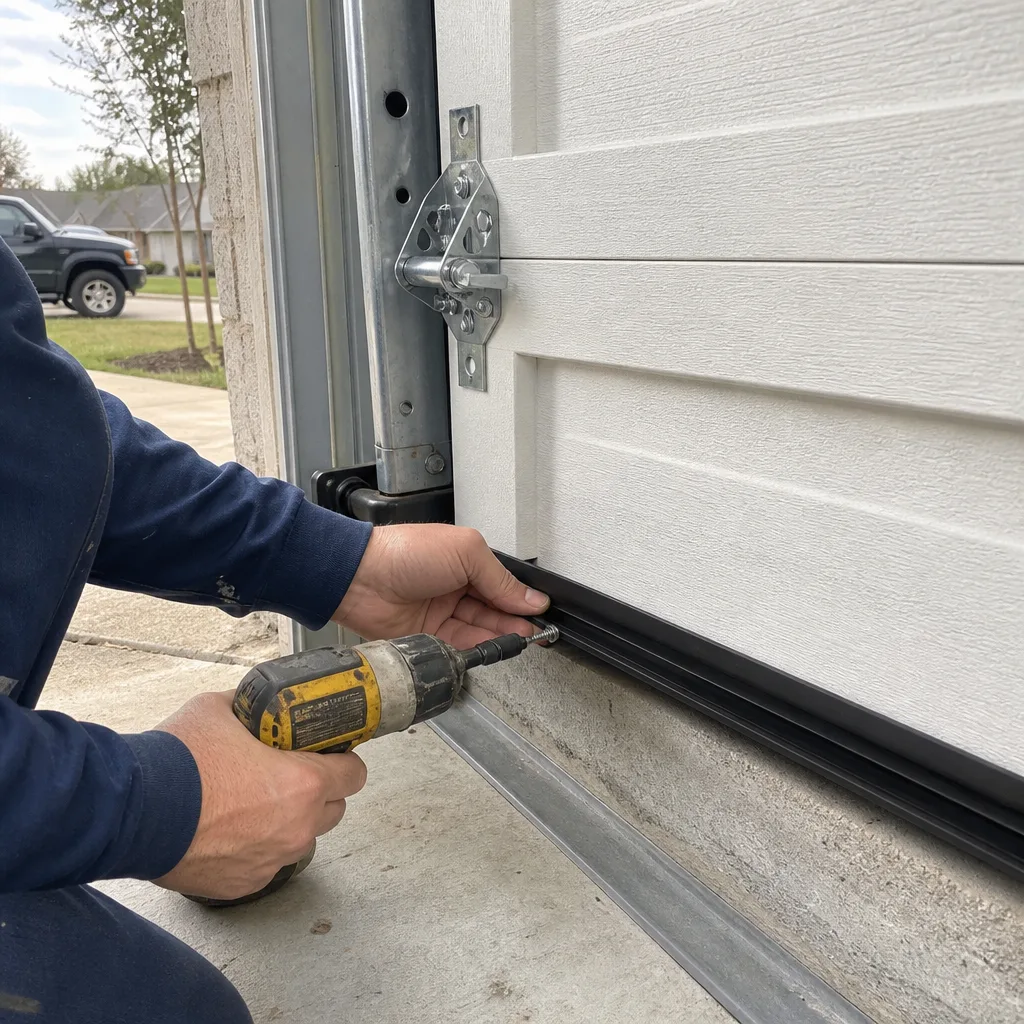
Most common repairs in Tomball range from $180 for a cable replacement to $340 for a standard torsion spring replacement, with opener repairs typically between $150 and $280 depending on whether the logic board, trolley carriage, or limit switch requires replacement. High-cycle springs, custom wood doors, or wind-load-rated installations run higher. Call (346) 703-6675 for an exact quote - estimates are free.
You can, but you’re assuming liability for injury and code compliance that a licensed contractor’s insurance covers. In Texas, an unlicensed worker injured on your property may file against your homeowner’s policy. The TDLR license and insurance verification we described earlier exists precisely because garage door work involves high-tension components that cause serious injury.
A binding quote contains the phrase “flat price” or “fixed price,” lists specific parts by specification, includes labor tasks, and requires both parties’ signatures before work begins. An estimate contains language like “subject to change,” “approximate,” or “pending inspection.” At Servo Garage Doors Tomball, we don’t provide estimates for repairs; we provide flat written prices per Clause 1 of The Haven Standard.
Clopay and Amarr dominate new installations in Tomball’s newer developments, with steel carriage-house styles being the most requested upgrade. For openers, Chamberlain and Genie represent the majority of installed base, with belt-drive models increasingly popular for quieter operation in homes with bedrooms above the garage. We service all eight major brands and can source any of them for installation.
For emergency situations - door stuck open, broken spring with vehicle trapped, safety system failure - same-day response is available from operators with 24/7 live answering. For non-emergency repairs and all installations, measured scheduling allows proper part ordering and preparation. We answer calls live 24 hours a day, including holidays, and emergency dispatches include a named technician and on-the-way text with ETA.
Don’t pay under protest without documentation. Request itemization showing where the quote differed from actual work. If the original document was a non-binding estimate, your legal recourse is limited. If it was a flat written price, the excess is uncollectable unless you signed a change order. This is why we emphasize the signature step: once both parties sign the flat price scope at Servo Garage Doors Tomball, that number doesn’t change.
The Bottom Line
Hiring a garage door contractor in Tomball comes down to documents, not charm. For a full walkthrough, see The Complete Guide to Garage Door in Tomball. Verify the TDLR license. Verify the insurance. Demand a flat written price with specific part specifications before any work starts. Ask for the photo record. Use the scorecard. The contractor who meets these standards without hesitation has nothing to hide and everything to prove with the work itself.
We’ve completed over 18,000 garage door jobs since 2015, every one with a written price before work started and a documented record when the technician left. That system - The Haven Standard - exists because we believe evidence outperforms promises. If you’re comparing contractors, bring us any competing written estimate for a free second opinion, no coupon required.
Call (346) 703-6675 for a free estimate. You’ll receive a named technician, a flat written price, and a documented photo record - or you won’t receive an invoice, because we don’t start work any other way.
Written by Marcus Deller, Owner at Servo Garage Doors Tomball, serving Tomball since 2015.