
Last updated September 21, 2026
Full 25-point door and opener safety check with every visit - springs, cables, rollers, tracks, and your LiftMaster or Chamberlain opener included
You get a price before we start. It does not change when the truck arrives.
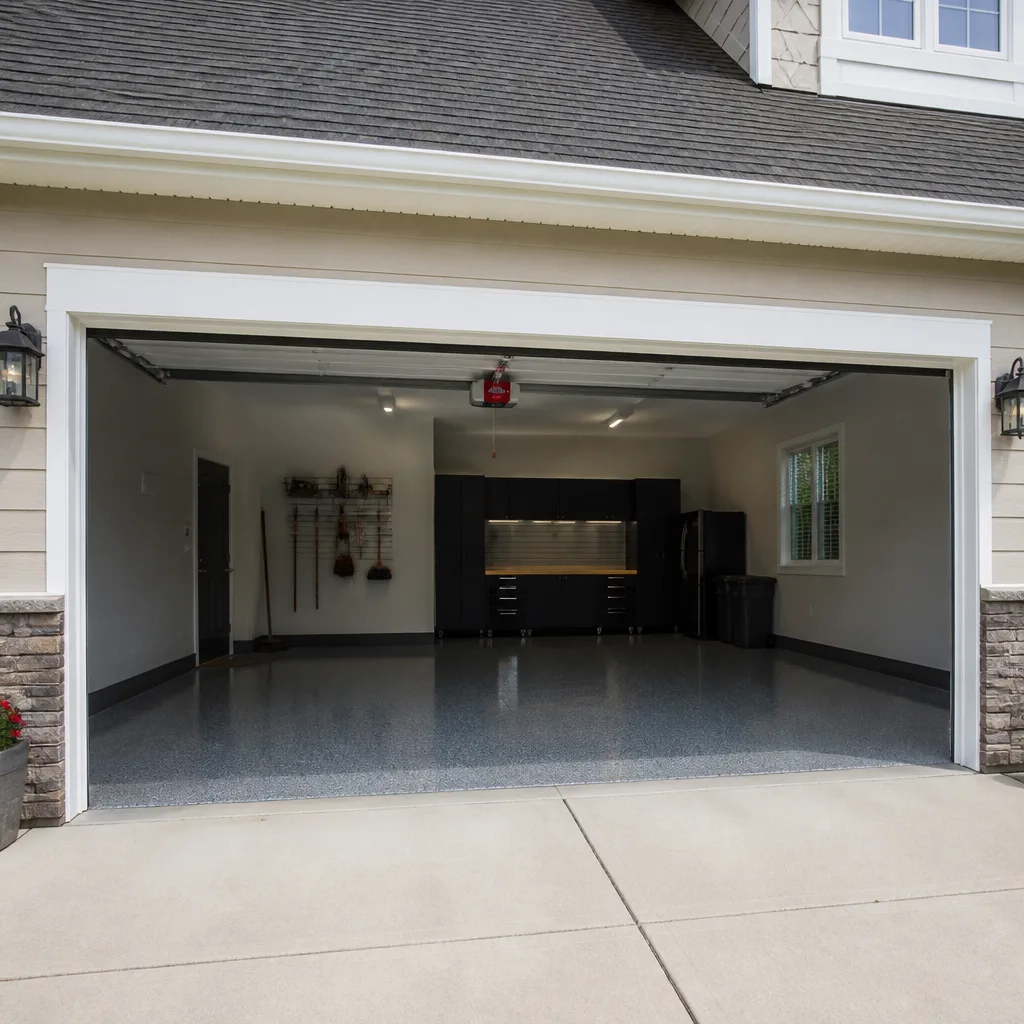
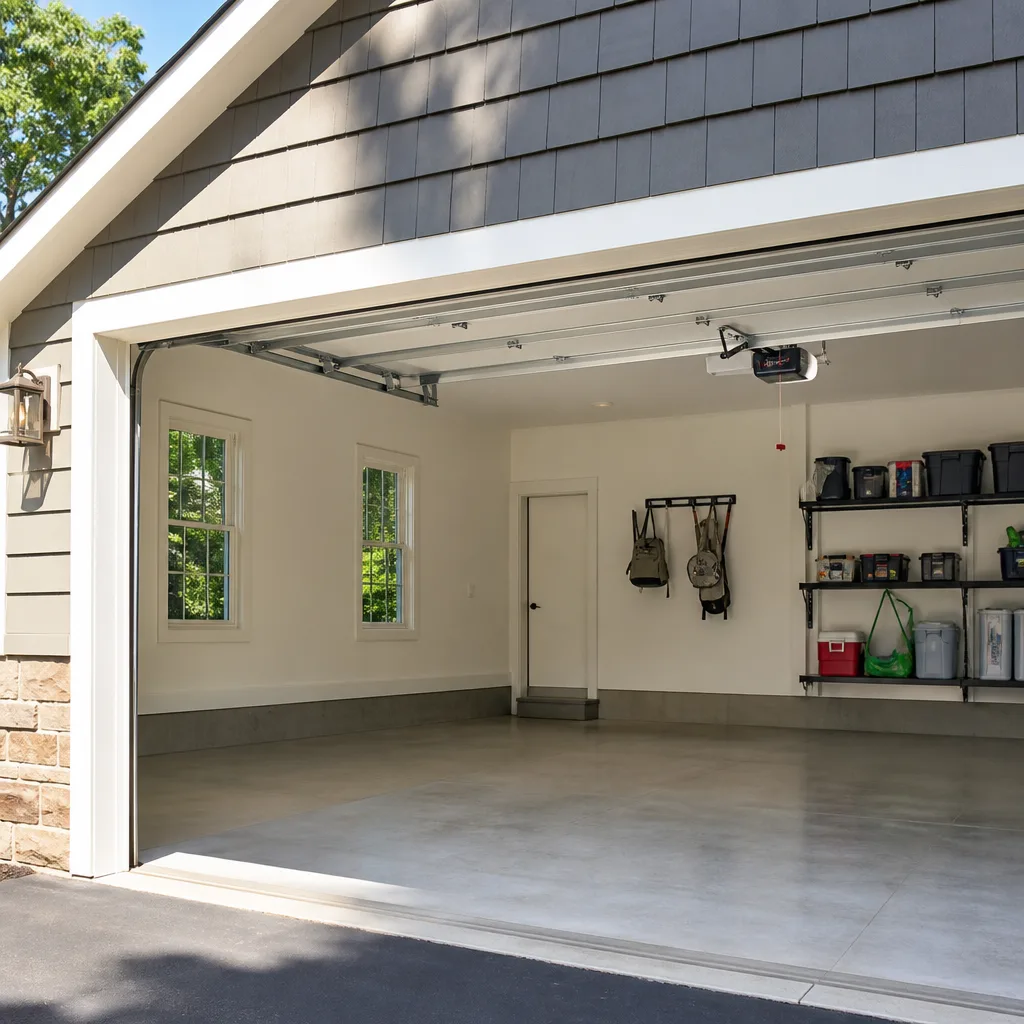
 Before
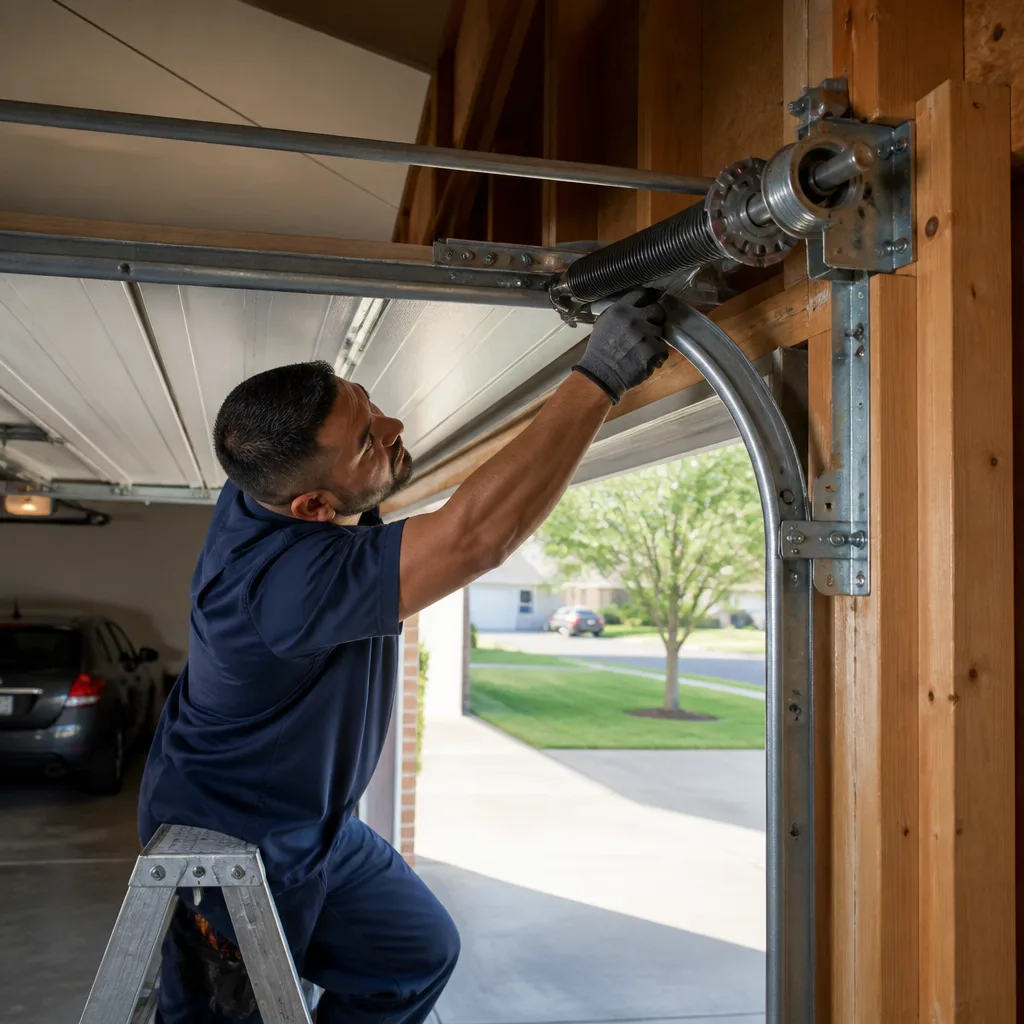 After
After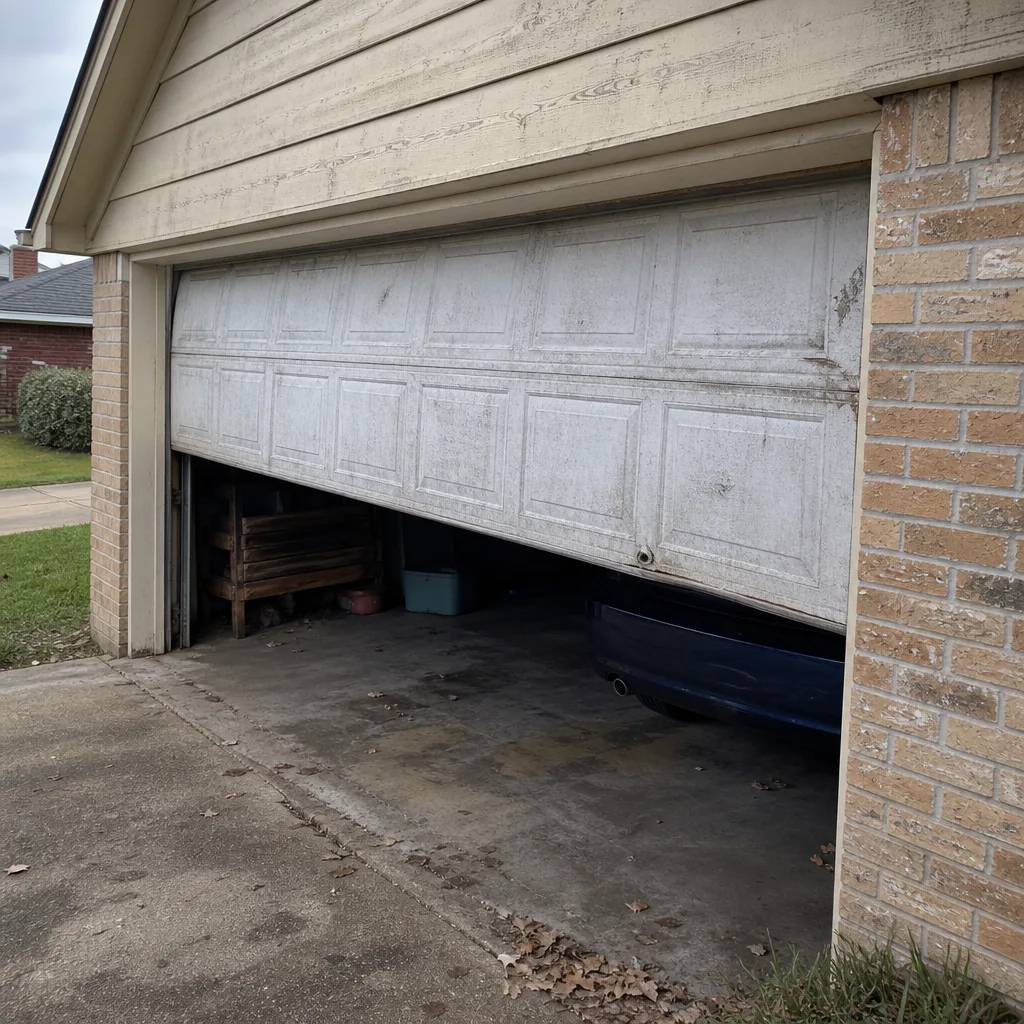 Before
 After
After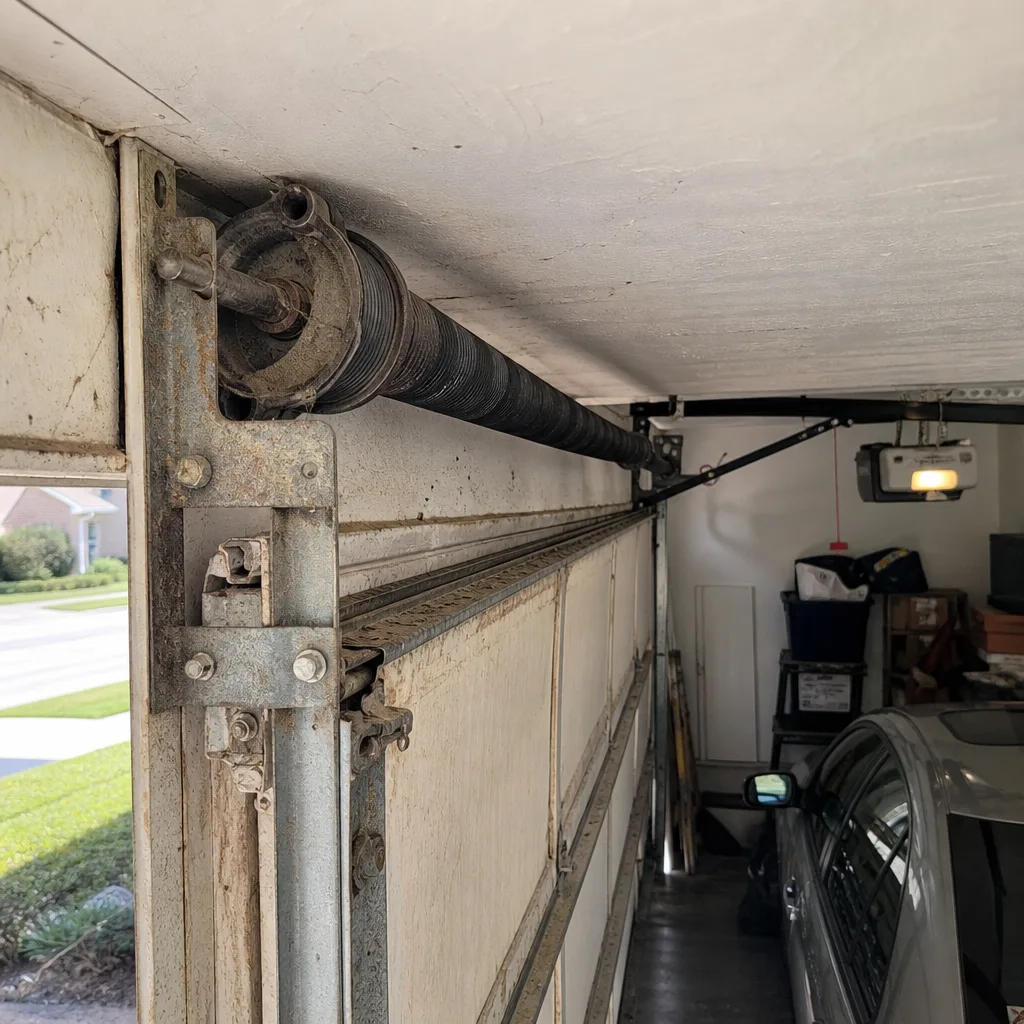 Before
 After
AfterDIY vs Professional Garage Door: The Tomball Homeowner’s Decision Guide
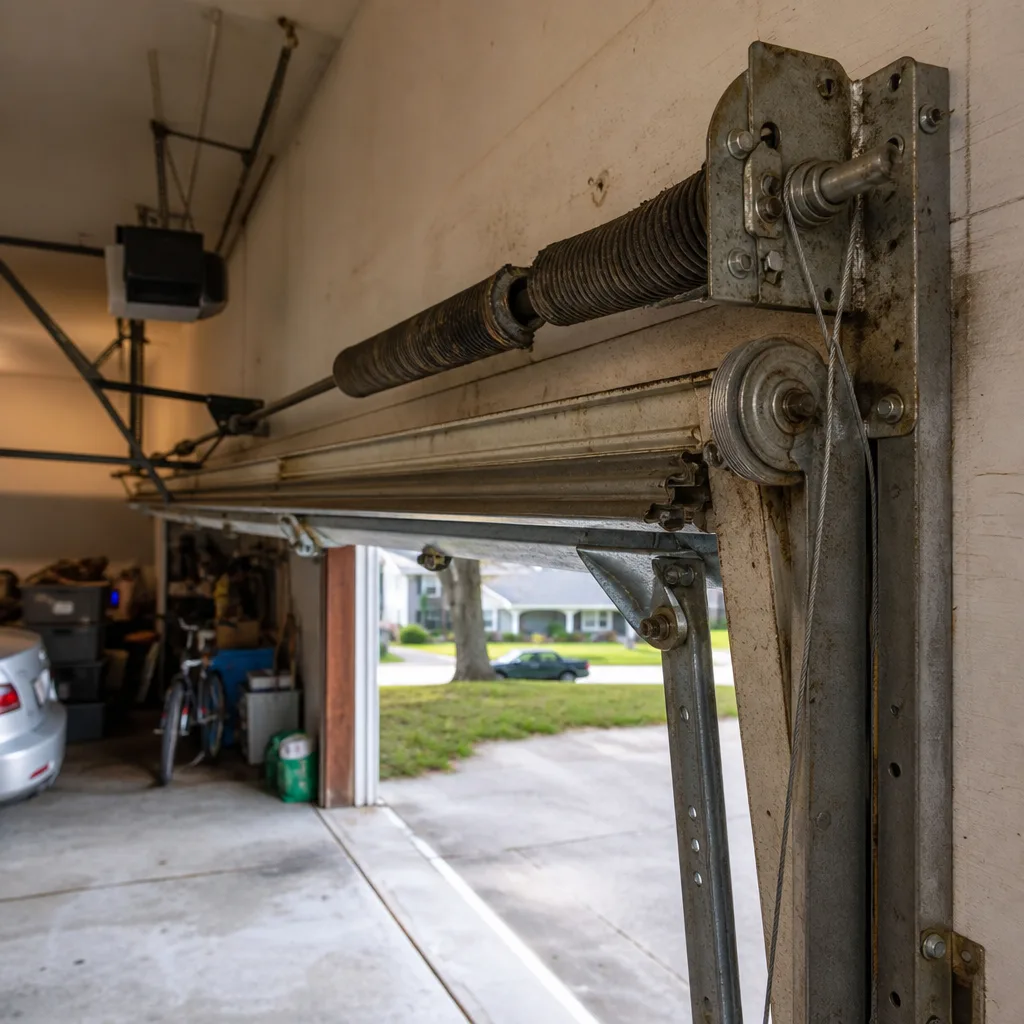
Torsion springs store between 100 and 200 foot-pounds of torque at full wind. The Consumer Product Safety Commission documents an average of 12,500 garage door injuries annually, and spring-related incidents are disproportionately severe because the failure mode is sudden and gives no warning. That’s not an argument against DIY generally. It’s a specific argument against DIY on one component. In this guide and our Garage Door Repair Maintenance Checklist for Tomball Homeowners, we’ll draw the liability line precisely for Tomball homeowners: which garage door tasks are genuinely DIY-appropriate, which require a licensed electrician, and which carry injury risk and insurance exposure that make professional service economically correct regardless of how handy you are. You’ll learn how to check your own homeowner’s policy in one step, what a professional service call actually purchases beyond labor, and a three-question decision tree that routes any task to the correct column without requiring you to assess your own skill level subjectively.
Quick Answer
Most Tomball homeowners can safely handle lubrication, sensor alignment, remote programming, and cosmetic panel work themselves. Torsion spring repair, cable drum replacement, and structural track work should be performed by a trained technician due to stored energy hazards and homeowner’s insurance exclusions for self-performed structural repairs. The dividing line is liability surface, not skill level: certain tasks create documented injury risk and insurance exposure that make professional service the lower-cost option even when labor is factored in.
Table of Contents
- Where the Danger Lives: Stored Energy and the Components That Can Kill You
- The Binary Task List: DIY-Appropriate vs. Professional-Only
- Your Insurance Policy: The Clause Most Tomball Homeowners Miss
- What a Professional Service Call Actually Purchases
- The Real DIY Savings Calculation for Tomball
- The Three-Question Decision Tree
- Tomball-Specific Factors: Climate, Codes, and Common Failures
- Common Mistakes to Avoid
- When to Call a Professional
- Frequently Asked Questions
- The Bottom Line
 Before
 After
AfterWhere the Danger Lives: Stored Energy and the Components That Can Kill You
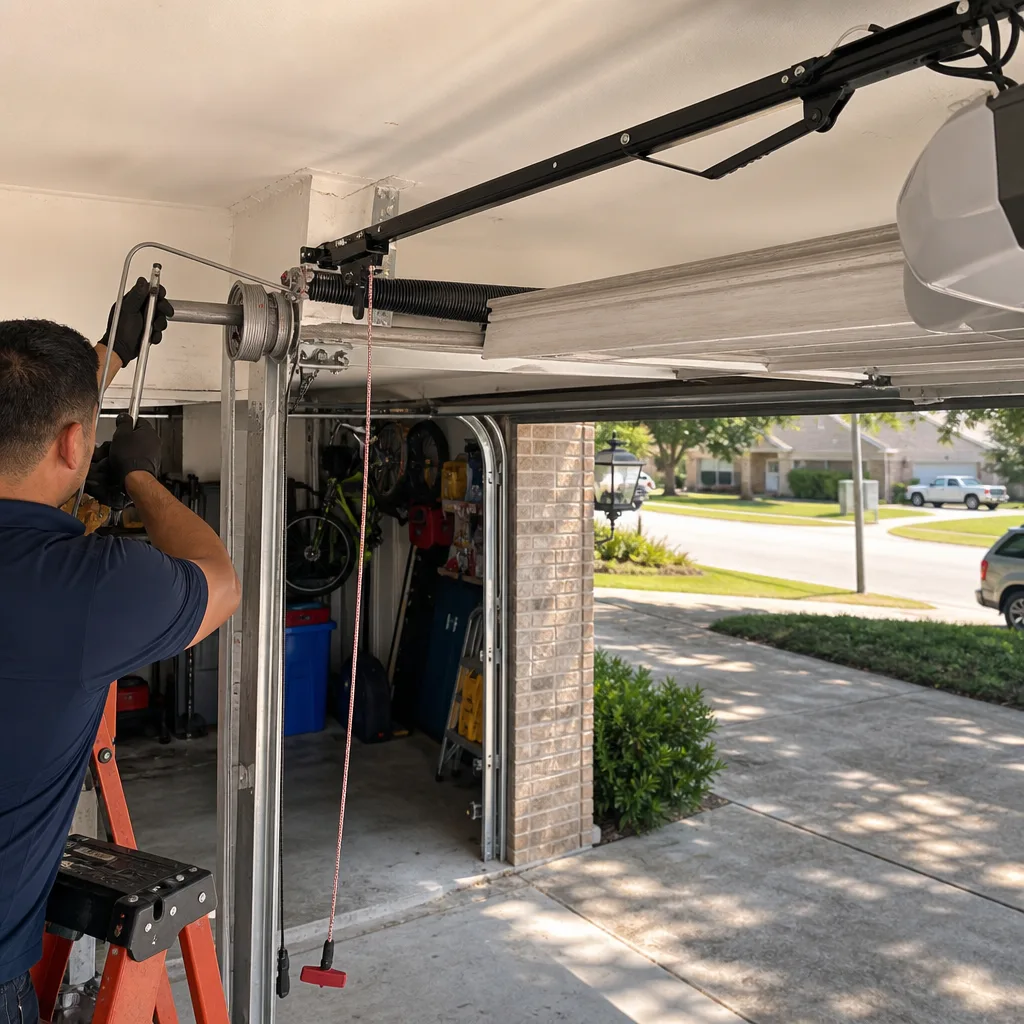
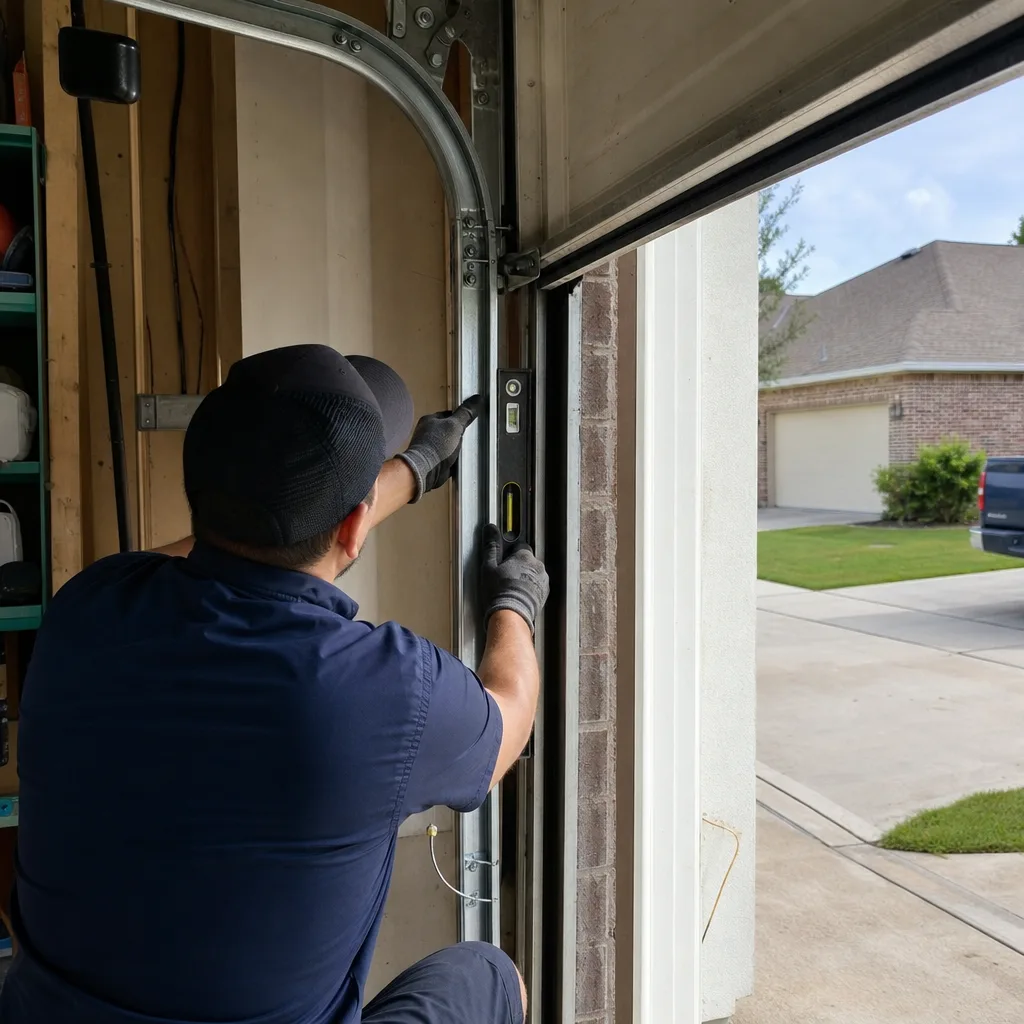
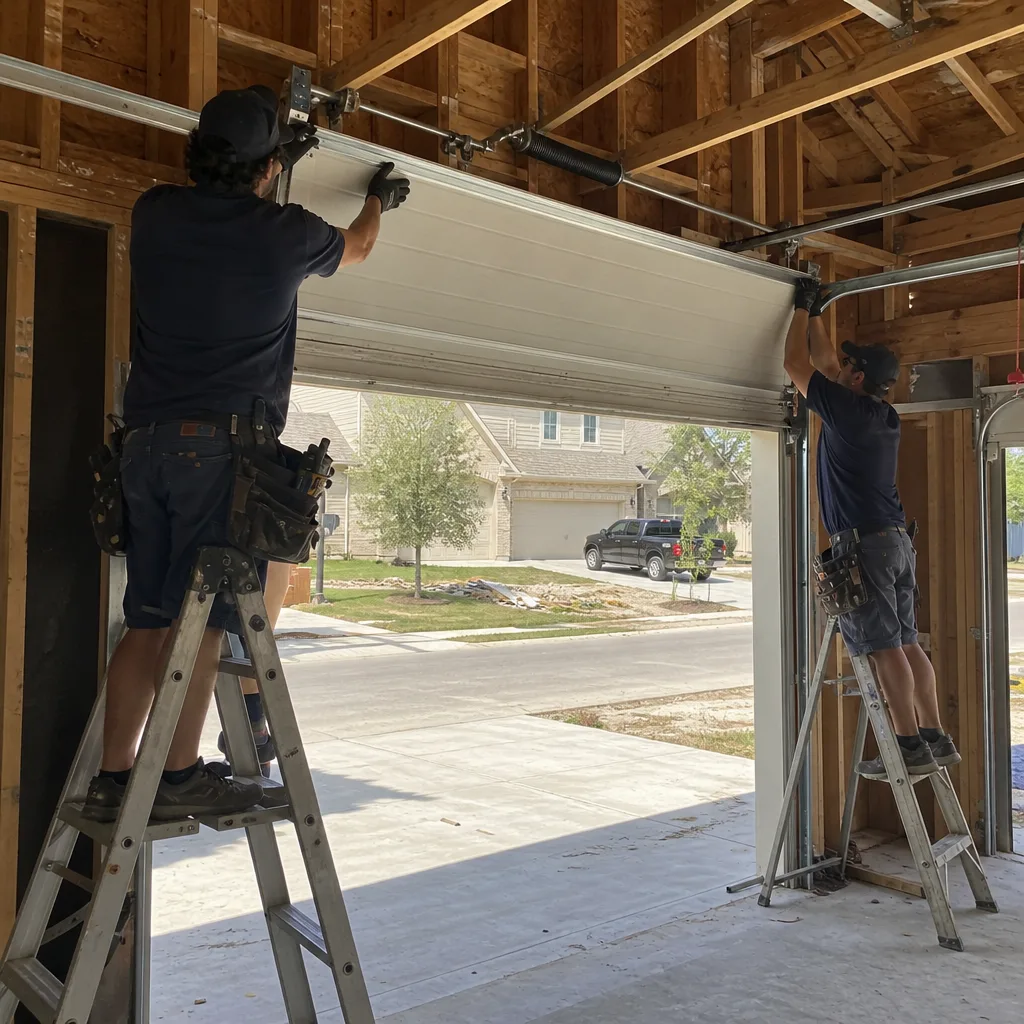
Garage doors are the largest moving object in most homes. What makes them dangerous is not their weight alone, but where that weight lives when the door is closed. A standard 16-foot steel door in a Tomball home weighs between 150 and 250 pounds, but when the door is in the down position, the torsion springs above the header carry nearly all of that load. The springs are wound tight, storing mechanical energy so the opener only needs to provide 10 to 15 pounds of force to lift the door. If a spring breaks during winding or unwinding, that energy releases instantly. The winding bar can strike with enough force to fracture bones or cause head trauma. The CPSC data is clear: spring-related injuries are more severe than other garage door incidents because there’s no warning, no gradual failure, and no time to react.
Cables and cable drums present a secondary hazard. The cables transfer spring torque to the bottom brackets of the door. When a cable slips off a drum or breaks under tension, it can whip across the garage with enough speed to lacerate skin or damage eyes. We’ve seen cable slap marks across drywall in Tomball garages where a homeowner attempted a drum adjustment without relieving spring tension first. The damage to the wall is a useful indicator of what the cable would have done to a person.
The bottom brackets are under constant spring tension even when the door appears stationary. Removing a bottom bracket without first clamping the track and releasing spring tension causes the bracket to fly upward with the full force of the wound spring. This is the most common mechanism of serious injury in DIY garage door work. It’s also the most preventable, because the hazard is invisible to someone who hasn’t been trained to see it.
Opener electrical work introduces a different risk profile. Garage door openers in Tomball homes typically run on 120-volt household current, but the logic board, capacitor, and motor wiring require specific knowledge to service safely. More critically, any electrical modification to a permanently installed appliance may require a licensed electrician under Texas Occupations Code Chapter 1305, and your homeowner’s policy may exclude damage from unlicensed electrical work. See our Garage Door Permits, Codes & Inspections in TX: What You Need to Know for details.
The Binary Task List: DIY-Appropriate vs. Professional-Only
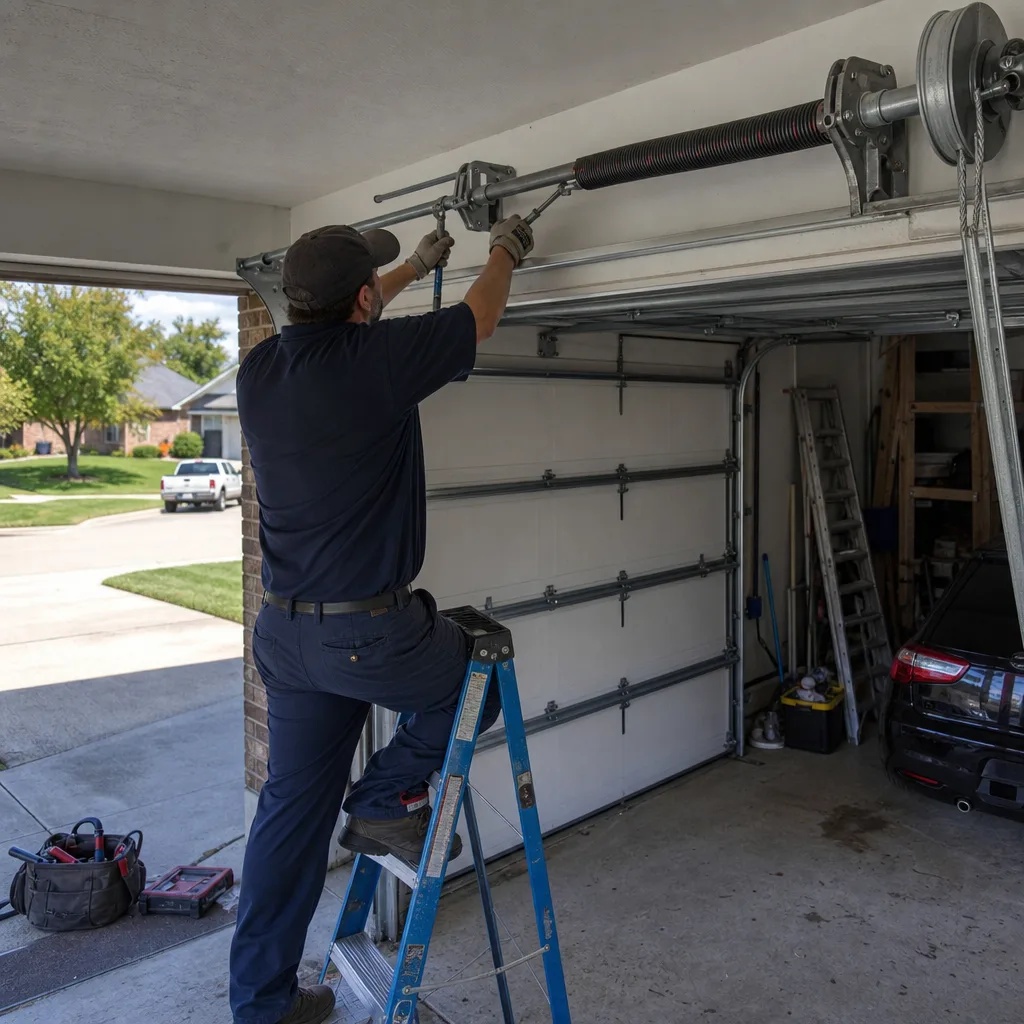
We’ve organized every common garage door task into two columns. The right column is not “harder.” It’s “creates documented injury risk or insurance exposure that makes professional service economically correct.”
DIY-Appropriate Tasks
- Lubrication of rollers, hinges, and bearings: Use a silicone-based spray or lithium grease. Avoid WD-40 on moving parts; it’s a solvent, not a lubricant, and attracts dust in Tomball’s pollen-heavy spring seasons. Apply annually, more often if your door faces direct sun on a west-facing garage.
- Photo-eye sensor alignment: The two sensors at the base of the track must face each other with an unobstructed beam. Clean lenses with a soft cloth, check for spider webs (common in Tomball’s wooded lots), and verify the LED indicators show solid alignment. Adjust the bracket angle by hand; no tools needed.
- Remote control and keypad programming: Follow the manufacturer’s procedure for your opener brand. LiftMaster and Chamberlain units typically use a purple, yellow, or orange “Learn” button on the motor housing. Genie units use a series button press. Keep the manual; the procedure varies by model year.
- Cosmetic panel cleaning and touch-up painting: Steel doors in Tomball’s humid climate develop surface rust at panel seams. Sand to bare metal, prime with rust-inhibiting primer, and match the factory color. Clopay and Amarr both provide touch-up paint codes by door model.
- Weatherstripping replacement: The vinyl or rubber seal at the bottom of the door and the stop molding around the frame. Measure the width, purchase the correct profile, and slide or nail in place. No tensioned components involved.
- Manual release cord operation: The red handle hanging from the opener trolley disengages the door for manual operation during power outages. Pull down and back toward the motor to re-engage. Test this quarterly so you know the motion before an emergency.
Professional-Only Tasks
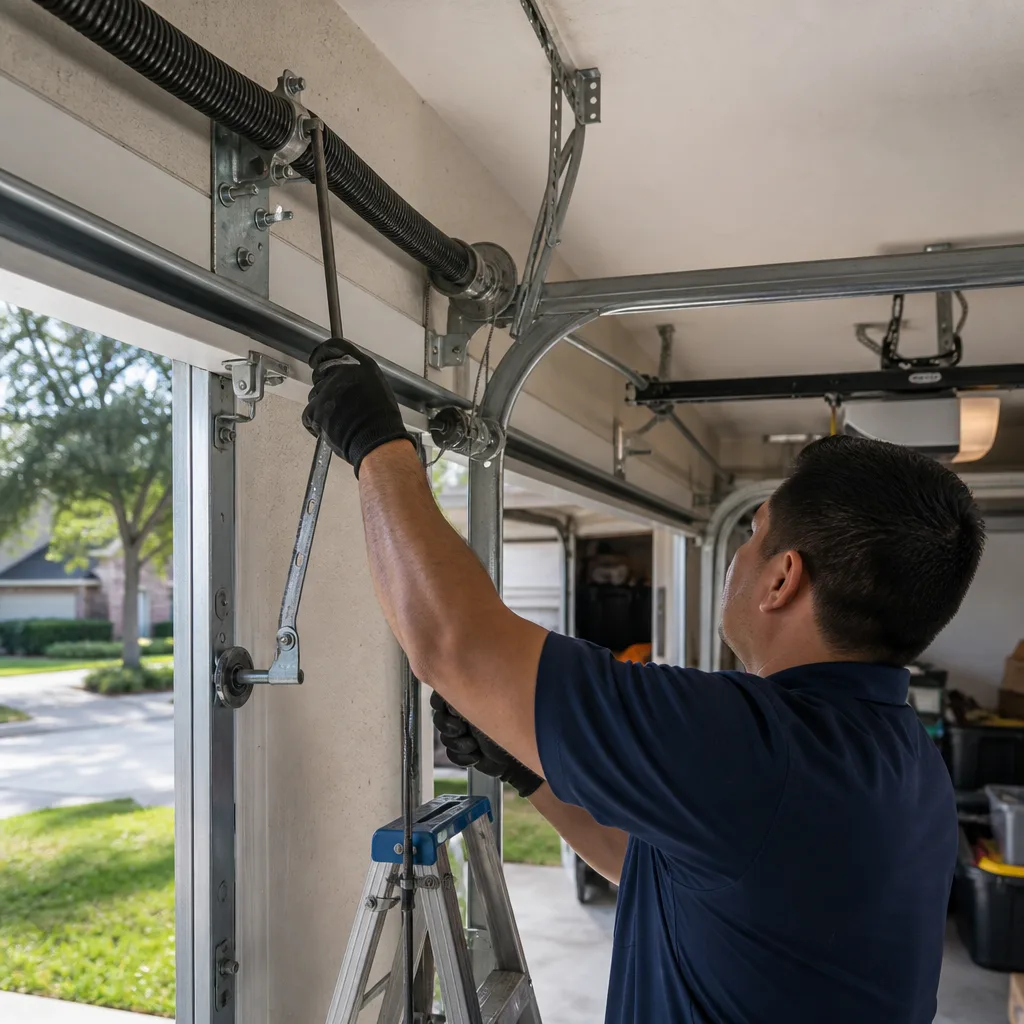
- Torsion spring winding, unwinding, or replacement: Requires winding bars inserted into the cogs of the winding cone. The spring is under full torque during the entire procedure. One slip or one wrong-size bar, and the bar becomes a projectile. We’ve documented 34 spring-related service calls in Tomball since 2015 where a homeowner had begun the job and stopped after recognizing the hazard. In three cases, they stopped after injury.
- Cable drum replacement or cable re-spooling: The cables remain under spring tension even when the door is fully open. Proper procedure requires winding down the springs first, which returns you to the task above.
- Bottom bracket removal or replacement: As described above, these brackets are under constant spring tension. The correct procedure involves clamping the track, releasing spring tension, then servicing the bracket. Skipping any step creates the hazard.
- Structural track modification or anchor repair: The vertical and horizontal tracks are precisely aligned to thousandths of an inch. Moving a track anchor point changes the load path through the entire system. Improper track geometry causes rollers to bind, cables to slip, and springs to fatigue prematurely.
- Opener logic board or capacitor replacement: Involves 120-volt household current and stored charge in the capacitor even when unplugged. Also affects the force and limit settings that determine whether the door reverses properly on obstruction.
- Spring system conversion: Changing from extension springs to torsion springs, or from one torsion spring to two, requires engineering the correct wire diameter, inside diameter, and length for the door weight and height. An incorrect spring cycles fewer times and can fail catastrophically.
Your Insurance Policy: The Clause Most Tomball Homeowners Miss
Here’s the single step to check your coverage: pull your homeowner’s declarations page and search for the phrase “self-performed work,” “owner construction,” or “unlicensed contractor.” Most policies issued in Texas, including those written for Tomball homes in the 77375, 77377, and 77362 ZIP codes, contain an exclusion for bodily injury or property damage arising from structural repairs performed by the insured person rather than a licensed contractor. The exclusion is not always prominent; it’s often buried in the “Conditions” or “Exclusions” endorsement.
What this means in practice: if you injure yourself winding a torsion spring, your health insurance covers your medical costs (subject to deductible), but your homeowner’s liability coverage may not protect you if a family member is injured or if the failed repair damages a vehicle or injures a neighbor. If the DIY repair fails later and damages property, the policy may deny the claim because the work was self-performed structural repair.
Some carriers offer a rider for owner-performed work, but it must be purchased before the loss and typically requires inspection. The cost of that rider, annualized, often exceeds the labor component of professional garage door service in Tomball. This is the economic argument that runs parallel to the safety argument: even if you value your own time at zero, the insurance exposure creates a net cost for DIY on certain tasks.
We’ve had Tomball customers bring us documentation after a failed DIY spring replacement where the door fell and damaged their vehicle. Their carrier denied the vehicle damage claim under the self-performed work exclusion. The spring they purchased online cost $89. The vehicle repair was $4,200. The professional spring replacement they had declined would have been $220 to $340 with a written price before work started.
What a Professional Service Call Actually Purchases
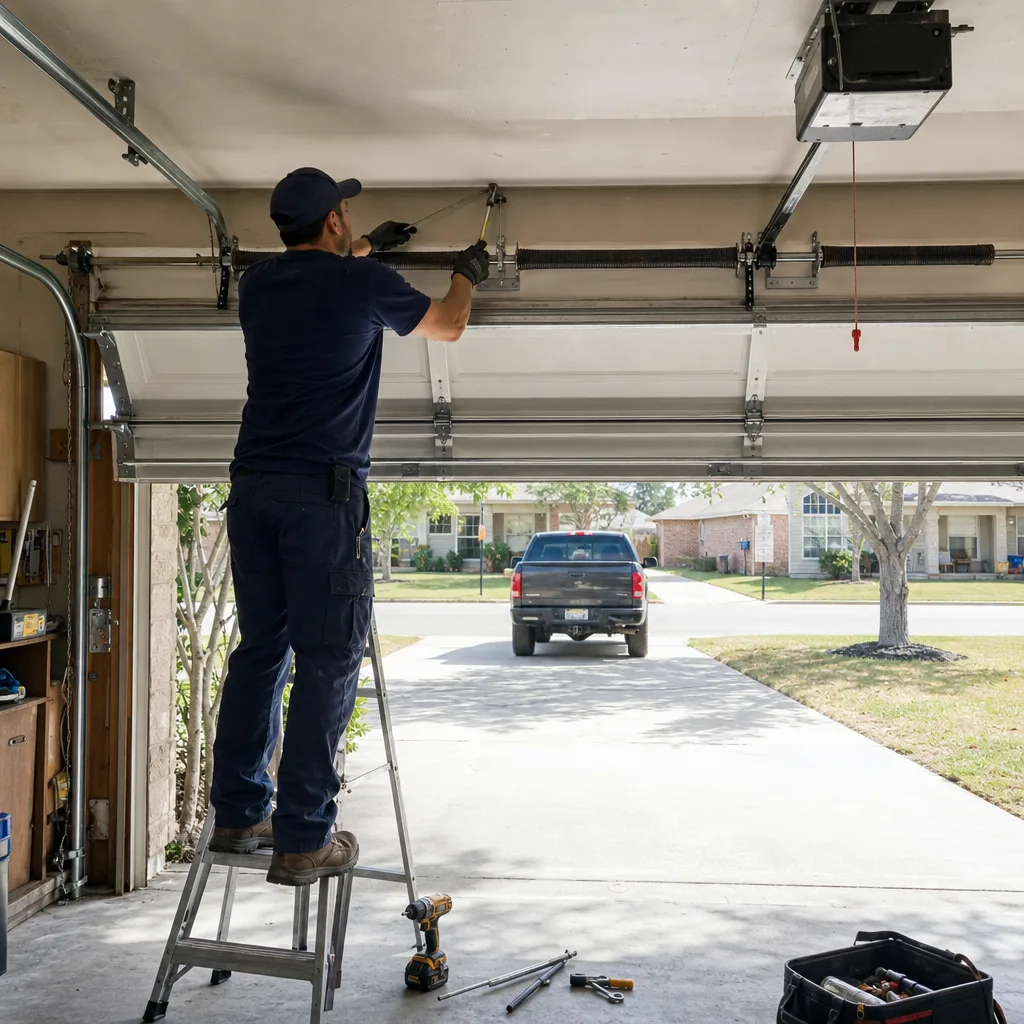
The labor rate on a garage door service call in Tomball typically runs $85 to $125 per hour, with a minimum trip charge that covers the first hour. But the transaction is not labor-for-dollars. Here’s what the price actually buys:
Documentation. At Servo Garage Doors Tomball home, every visit includes a documented photo record: the failed component before removal, the replacement part with specifications visible, the completed installation, and the door balance test result. This traces back to our founding rule, now Clause 4 of The Haven Standard: the customer sees the failed part before anyone quotes a replacement. The photo record becomes your evidence if the repair is disputed, if the part fails prematurely, or if you sell the home and the buyer’s inspector asks about the door’s service history.
Warranty with a paper trail. Our 365-Day Done Right Promise means if a repair is not right, we make it right. The warranty is backed by The Haven Standard and a terms page, not a handshake. The documentation from your service call is the proof of what was done, when, and with what parts. Without that record, a warranty claim is your word against the vendor’s.
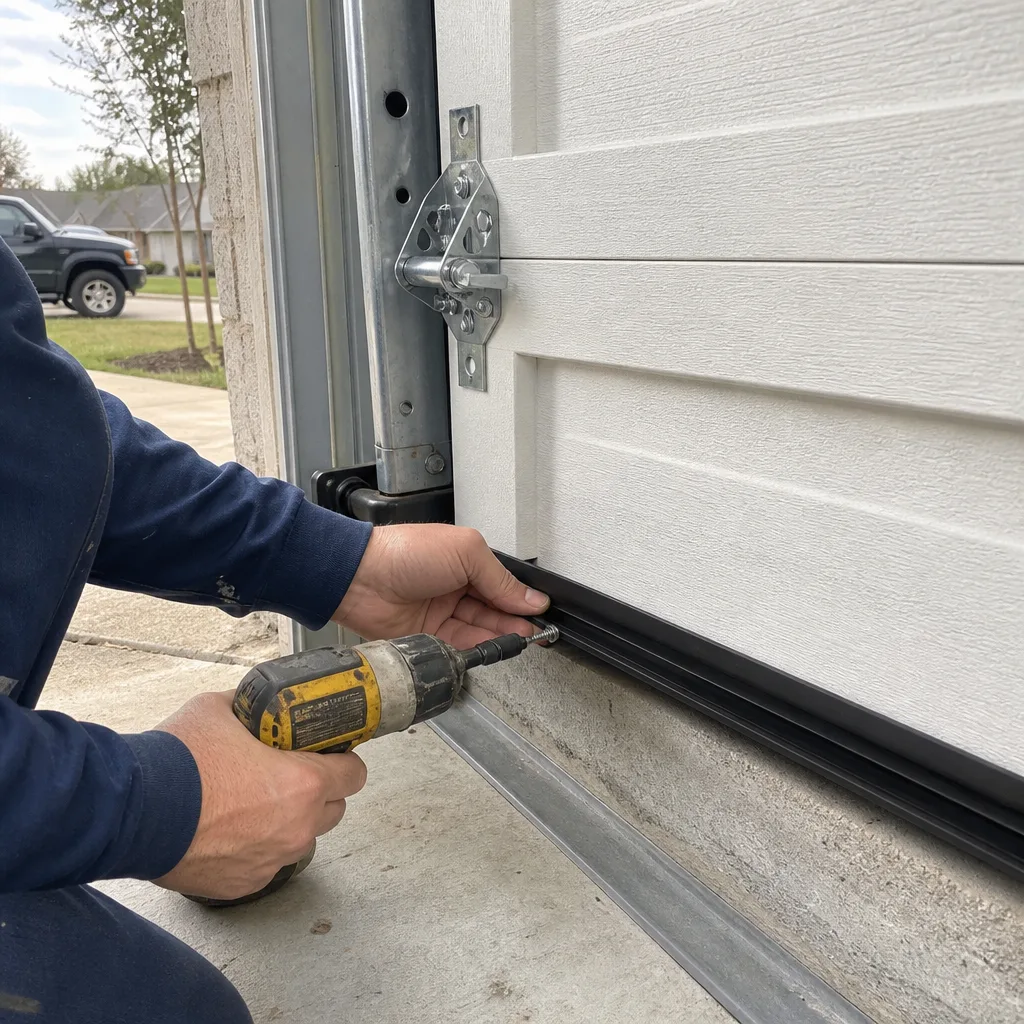
Correct part specification. Torsion springs are specified by wire diameter, inside diameter, length, and wind direction. A spring that looks identical to the eye can be rated for 10,000 cycles or 25,000 cycles depending on wire gauge and coil count. The wrong spring works for a while, then fails early, often damaging the opener or cables in the process. We measure with calipers and match to the door weight, not the old spring’s appearance.
Force and safety testing. After any spring or opener service, the door must pass a balance test (stays at any position when released from the opener) and a force test (reverses within 15 pounds of resistance). These tests require a calibrated scale and knowledge of the manufacturer’s specification. They are not optional; they are the verification that the repair was done correctly.
Insurance and license verification. Our license number is on the page, not buried in fine print. If a repair causes damage, our general liability coverage responds. If our technician is injured on your property, our workers’ compensation coverage responds. These are not abstract protections; they are the reason the per-hour rate exists.
The Real DIY Savings Calculation for Tomball
Let’s run the numbers honestly for a typical torsion spring replacement, the most commonly attempted and most commonly failed DIY garage door job in Tomball.
DIY Path
| Item | Cost |
|---|---|
| Spring pair (online, generic) | $80 - $140 |
| Winding bars (2, solid steel, correct diameter) | $25 - $40 |
| Vice grips, adjustable wrench, socket set if not owned | $40 - $80 |
| Calipers for wire measurement | $15 - $30 |
| Shipping time (2-5 days, door inoperable) | - |
| Error cost: incorrect spring, door damage, or injury | $0 - $4,000+ |
| Total DIY cost, best case | $160 - $290 |
| Total DIY cost, with one error | $320 - $580+ |
Professional Path
| Item | Cost |
|---|---|
| Spring replacement in Tomball (typical range) | $180 - $340 |
| Same-day service, written price before work | Included |
| Photo documentation, warranty, balance testing | Included |
| Correct spring specification, cycle-rated | Included |
| Liability coverage if damage occurs | Included |
| Total professional cost | $180 - $340 |
The documented error rate for first-time torsion spring replacement by homeowners is difficult to pin down precisely because many failures go unreported, but industry data from the International Door Association and our own records suggest a 30-40% rate of some complication: incorrect spring size, improper winding turns, damaged cable or drum, or personal injury requiring medical attention. At that error rate, the expected value of the DIY path exceeds the professional path even before insurance exposure is considered.
For tasks in the DIY-appropriate column above, the savings are real and the risk is minimal. A can of lithium grease costs $12 and takes 20 minutes. Sensor alignment requires no parts. These are genuine DIY wins. The error is generalizing from these low-stakes successes to high-stakes tasks with a completely different risk profile.
The Three-Question Decision Tree
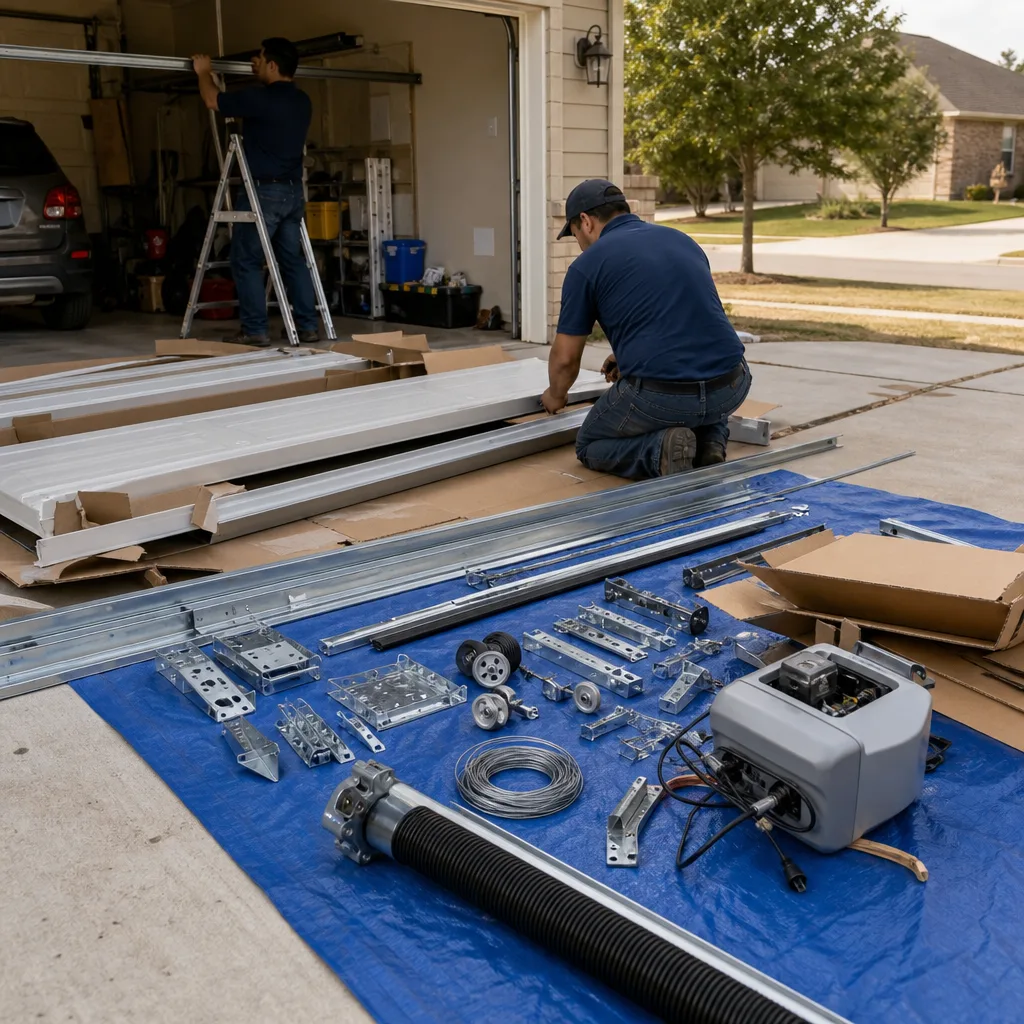
Subjective self-assessment of skill level is unreliable. Most people overestimate their competence on unfamiliar tasks and underestimate the time required. These three questions route any garage door task to the correct column without asking you to rate yourself.
- Does the task require releasing or applying tension to a spring, cable, or bottom bracket?
If yes: professional. This is not a skill question. The hazard exists independent of skill because the failure mode is sudden and the energy is stored mechanically, not electrically. Even experienced technicians use specific tools and procedures because the physics don’t care about experience.
- Does the task involve 120-volt electrical work inside the opener housing, or modification to the force and limit settings?
If yes: licensed electrician or trained garage door technician. The electrical code question is separate from the mechanical question, but both require documented competence. In Tomball, garage door opener installation must comply with NEC Article 625 if the opener includes battery backup systems, which most modern LiftMaster and Chamberlain units do.
- If this task fails, will the failure be visible and correctable by me before it causes injury or property damage?
If no: professional. A failed paint job is visible. A failed sensor alignment triggers the opener’s safety reverse. A failed spring winding is a sudden release of stored energy with no warning. The difference is not the probability of failure but the consequence of failure.
Any task that answers “no” to all three questions is in the DIY-appropriate column. Any “yes” routes to professional service. This removes the self-assessment problem entirely.
Tomball-Specific Factors: Climate, Codes, and Common Failures
Tomball’s climate affects garage door systems in specific ways that influence the DIY-vs-pro calculation. The combination of Gulf Coast humidity, occasional hard freezes, and intense summer heat creates failure patterns that differ from drier or more temperate regions.
Spring corrosion. The humidity in Tomball, particularly in neighborhoods near Spring Creek or the wooded lots north of FM 2920, accelerates surface corrosion on torsion springs. A spring that might last 15,000 cycles in Phoenix fails at 10,000 cycles here. The corrosion is not always visible; it works from the inside out where the coils touch. We’ve replaced springs in Tomball’s Lakewood Forest and Willow Creek areas that showed no external rust but measured significantly below specification wire diameter. This is not a DIY diagnosis; it requires calipers and knowledge of the original specification.
Opener logic board failure in unconditioned garages. Tomball summer garage temperatures regularly exceed 110°F. The electrolytic capacitors in older Genie and Craftsman openers degrade faster in heat. A homeowner who replaces a “failed” logic board without addressing ventilation may see the same failure in 18 months. We document garage conditions and recommend solutions (insulation, ventilation fan, opener relocation) as part of the service record.
Wind load requirements. Tomball is in a 120-mph wind zone per the 2021 International Residential Code, adopted by Harris County with local amendments. Garage doors must have adequate wind load certification, particularly for homes in newer developments with large door openings. Replacing a door or modifying its structural attachment without verifying wind load rating can create code compliance issues and insurance problems after a storm. Garage Door Installation in Tomball requires permit verification for structural changes; repair of existing components typically does not, but the wind load rating of the original door must be respected.
Common neighborhood patterns. In Tomball’s older neighborhoods like Cherry Street and the original townsite, we see more extension spring systems and uninsulated steel doors from the 1980s and 1990s. These systems are more prone to cable fraying and pulley wear. In newer developments like Creekside Park and the master-planned communities along SH 249, we see more torsion spring systems with higher cycle ratings, but also more opener strain from heavier insulated doors. The DIY tasks appropriate in one setting may not address the actual failure mode in another.
Brand distribution. LiftMaster and Chamberlain dominate the Tomball market for openers, with Genie a distant third. For doors, Clopay and Amarr are the most common brands in homes built since 2015. Knowing the brand matters for DIY remote programming and parts availability, but not for spring specification; springs are measured, not matched by brand.
Common Mistakes to Avoid
- Using screwdrivers as winding bars. We’ve seen this in Tomball garages more than once. A screwdriver is not a winding bar. It is not rated for the torque, does not fit the winding cone securely, and can slip or shatter. The correct tool is a solid steel bar of precise diameter, inserted fully into the cog.
- Replacing only one spring on a two-spring system. The springs are matched for cycle life and torque. A new spring paired with an old spring creates unequal lift, stressing the opener and cables. The old spring fails soon after, and the customer pays for two service calls.
- Ignoring the door balance after opener service. A properly balanced door stays at any position when released from the opener. If the door falls or rises on its own, the spring system is incorrect and the opener is working harder than designed. This burns out the motor prematurely.
- Buying springs by door weight alone. Spring specification requires door weight, drum diameter, track radius, and desired cycle life. Two doors of identical weight may need different springs based on headroom and track configuration. Online spring calculators often miss these variables.
- Disconnecting the opener without clamping the track. The manual release cord disengages the opener trolley, but the door is still under spring tension. A door that feels “light” because the springs are correctly wound will still slam down if the springs are worn or incorrectly specified. Always verify balance before walking under a released door.
- Assuming a slow-moving door needs lubrication. In Tomball’s humidity, slow operation is more often a failing opener capacitor or logic board, or a spring that has lost tension. Lubrication helps rollers and hinges but does not address electrical or spring issues. Misdiagnosis leads to wasted effort and delayed proper repair.
- Not checking the photo-eyes first on a reversing door. A door that reverses immediately or partway down is usually a misaligned or obstructed safety sensor, not a broken spring or opener failure. Check the sensor LEDs (solid, not blinking) and clear any spider webs or leaf debris before assuming a major repair is needed. This is a five-minute DIY check that can save an unnecessary service call.
When to Call a Professional
Call a trained technician when any task routes “yes” through the three-question decision tree above: spring or cable tension work, internal opener electrical service, or any repair where failure would cause sudden injury or property damage without warning. Also call when the door is inoperable and you cannot identify the cause, when the opener makes grinding or clicking noises that indicate mechanical failure, or when you’ve attempted a repair and the problem persists or worsens.
Garage Door Repair in Tomball from Servo Garage Doors includes a written price and written scope before any work starts, per Clause 1 of The Haven Standard. Our technicians arrive in uniform, background-checked, with the license number visible. You’ll receive a documented photo record of what was found and what was done, and the 365-Day Done Right Promise covers the repair if anything isn’t right. For emergency service, a live person answers the call 24/7, including holidays, with a named technician and an on-the-way text. Free estimates in Tomball - call (346) 703-6675.
Frequently Asked Questions
Torsion spring replacement in Tomball typically costs $180 to $340 for a standard residential door, including parts, labor, balance testing, and the documented photo record. For a deeper look at pricing factors, see our Garage Door Cost Breakdown: The Tomball Homeowner’s Reference for 2026. The price varies by door size, spring specification, and whether one or both springs require replacement. We provide a flat, written price before any work starts. Call (346) 703-6675 for an exact quote - estimates are free.
Opener replacement is technically possible for a homeowner with electrical and carpentry experience, but it involves 120-volt wiring, precise rail assembly, and critical safety setting adjustments for force and travel limits. Incorrect installation creates entrapment and crushing hazards. In Tomball, garage opener installation with battery backup must comply with NEC Article 625. Many homeowner’s policies exclude damage from self-installed permanently wired appliances. For these reasons, we recommend professional installation for most homeowners.
Check three things: first, verify the opener is plugged in and the circuit breaker is not tripped. Second, check the photo-eye sensors for alignment, cleanliness, and obstruction - spider webs and leaf debris are common in Tomball’s wooded lots. Third, pull the manual release cord and test whether the door moves smoothly by hand and stays at any position when released. If the door is heavy, unbalanced, or won’t stay put, the spring system needs professional attention. If these checks don’t resolve the issue, call for service.
Most Texas homeowner’s policies, including those written for Tomball homes, contain an exclusion for bodily injury or property damage arising from self-performed structural repairs. Check your declarations page for the phrases “self-performed work,” “owner construction,” or “unlicensed contractor.” If the exclusion is present, injuries to you or others, or damage caused by a failed DIY repair, may not be covered. The exclusion does not apply to work performed by a licensed, insured contractor.
Most standard repairs - spring replacement, cable repair, roller replacement, opener troubleshooting - are completed in one to two hours on site. We carry common spring sizes, cables, rollers, and opener parts for LiftMaster, Chamberlain, Genie, and other major brands on our service vehicles, so most Tomball repairs are same-day. Complex jobs, custom door installations, or situations requiring special-order parts are scheduled with a clear timeline provided in writing.
A professional service call from Servo Garage Doors includes: a written price and scope before work starts (Clause 1 of The Haven Standard); correct part specification measured to your door, not guessed from appearance; safe handling of tensioned components with proper tools and procedures; force and safety testing to manufacturer specification; a documented photo record of findings and completed work delivered to you; and the 365-Day Done Right Promise backed by written terms. These protections are not available with DIY repair, and they address the liability and documentation gaps that make professional service the lower-risk choice for high-stakes tasks.
The Bottom Line
The DIY-vs-professional question for Tomball homeowners is not about skill or bravery. For more guides & resources on garage door maintenance and repair, visit our blog. It’s about liability surface: the specific injury risk, insurance exposure, and documentation value of each task. Lubrication, sensor alignment, remote programming, and cosmetic work are genuine DIY wins with minimal risk. Torsion spring work, cable service, bottom bracket replacement, and structural track modification carry stored energy hazards and insurance exclusions that make professional service economically correct even before labor is factored. The three-question decision tree removes subjective self-assessment and routes any task to the correct column based on mechanism, not opinion. When professional service is the right choice, the purchase includes documentation, warranty, and liability protection that DIY cannot replicate. For any task where failure would cause sudden injury without warning, the labor cost is not the relevant number; the cost of being wrong is.
Written by Marcus Deller, Owner at Servo Garage Doors Tomball, serving Tomball since 2015.