
Last updated September 21, 2026
Full 25-point door and opener safety check with every visit - springs, cables, rollers, tracks, and your LiftMaster or Chamberlain opener included
You get a price before we start. It does not change when the truck arrives.
 Before
 After
After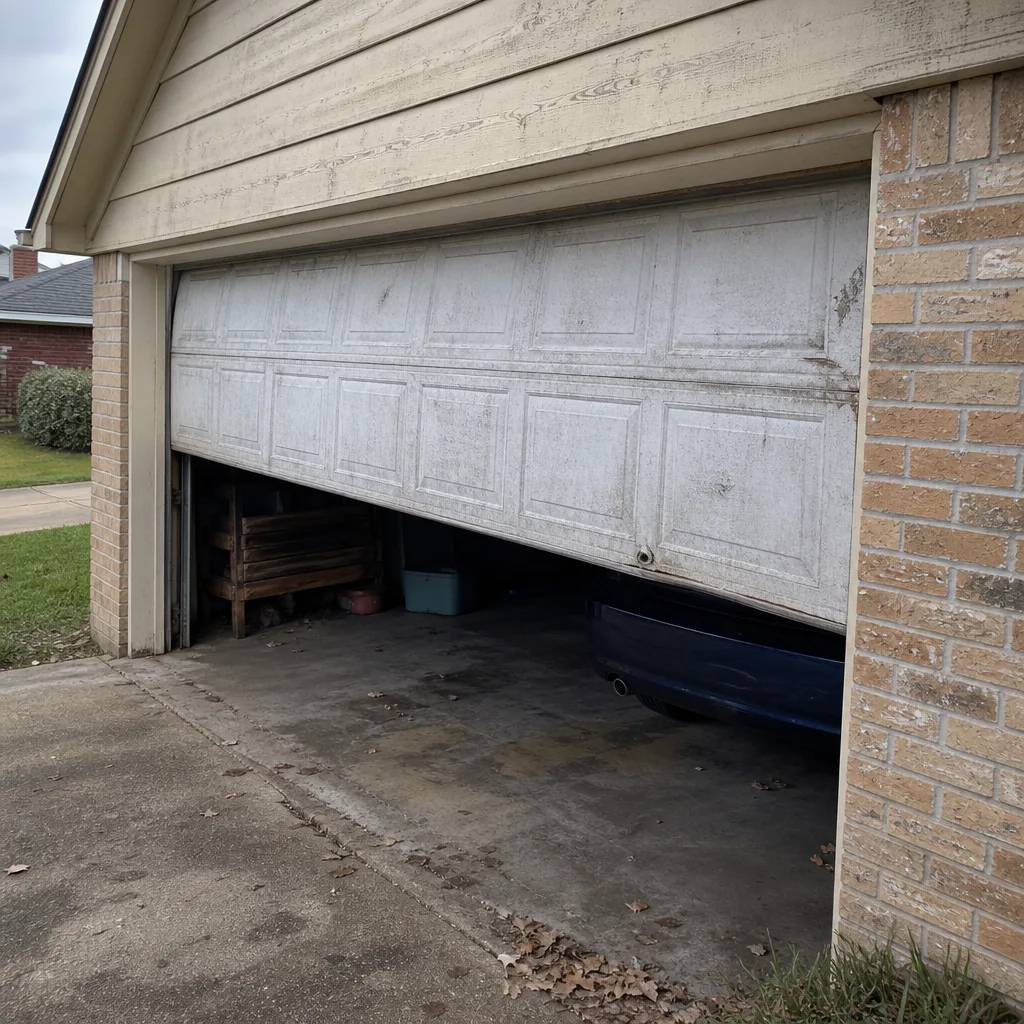 Before
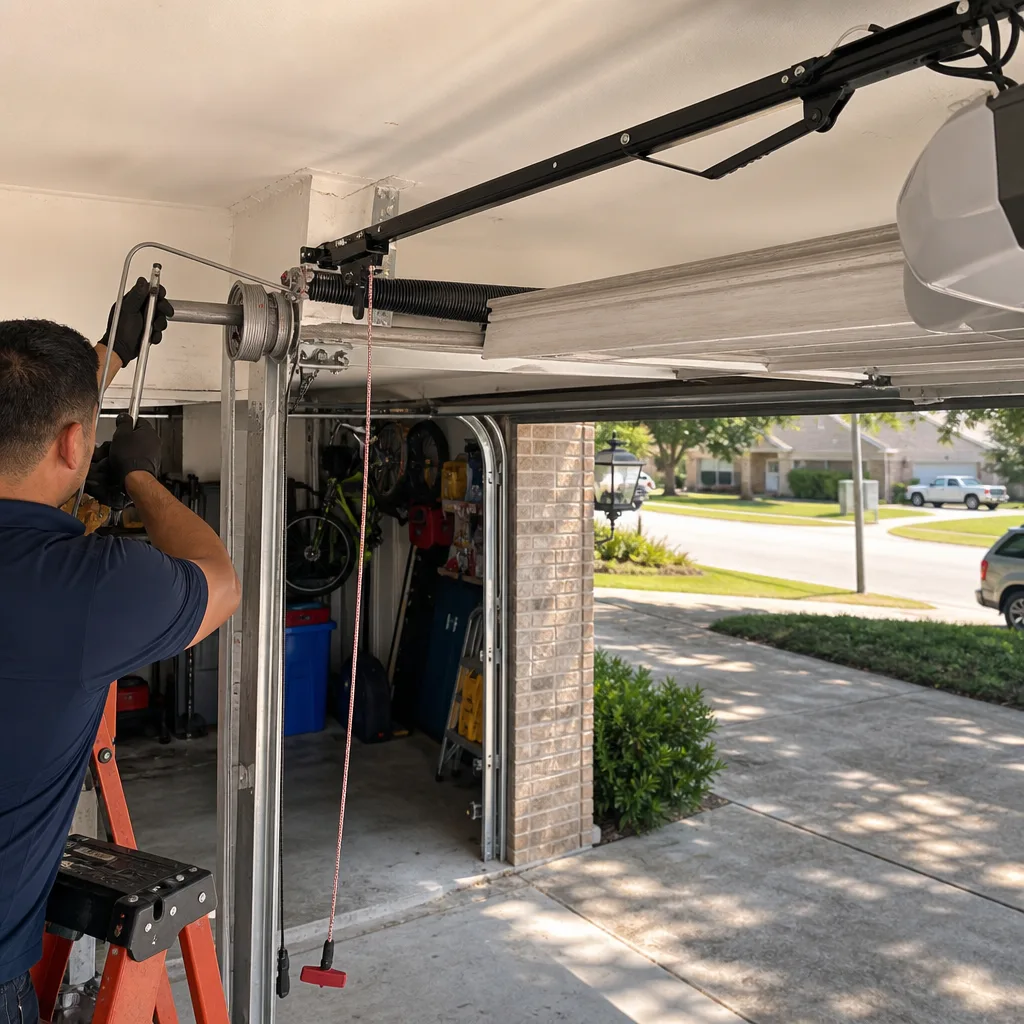 After
After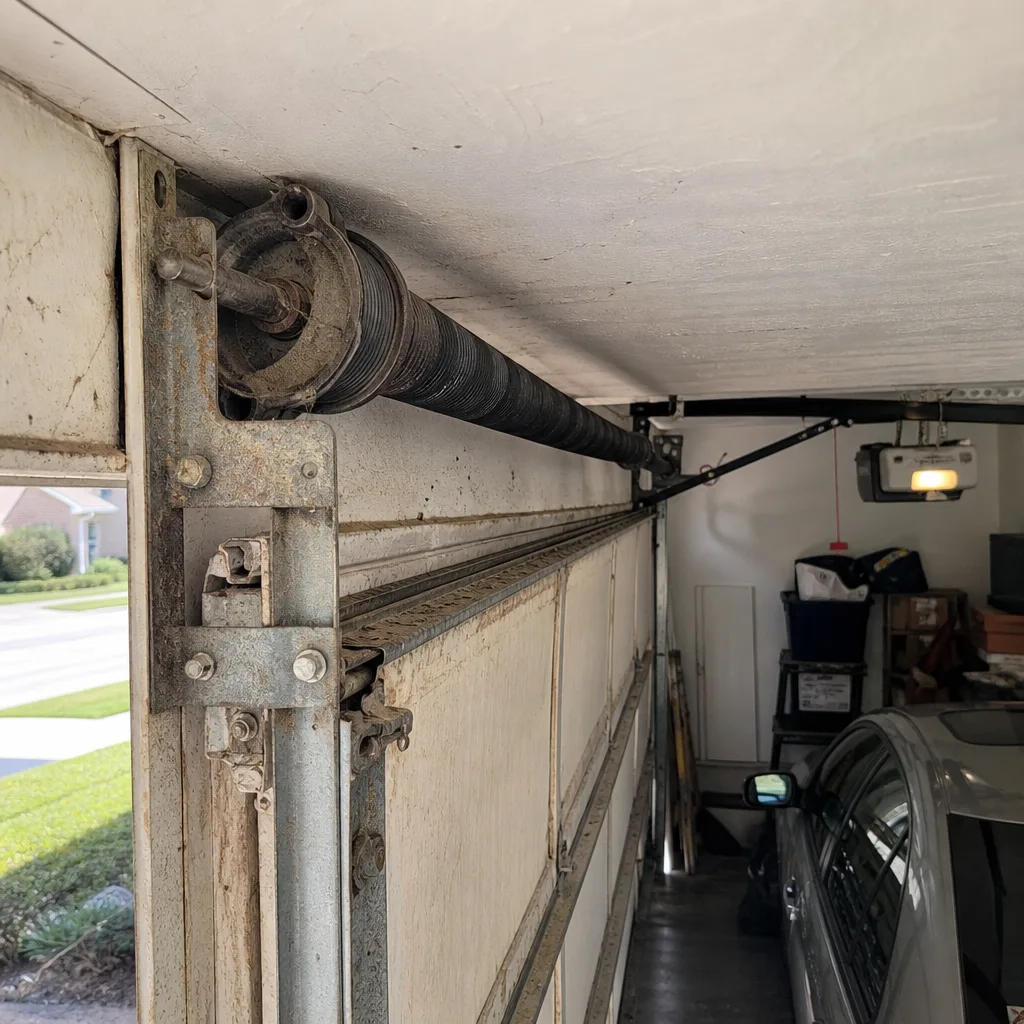 Before
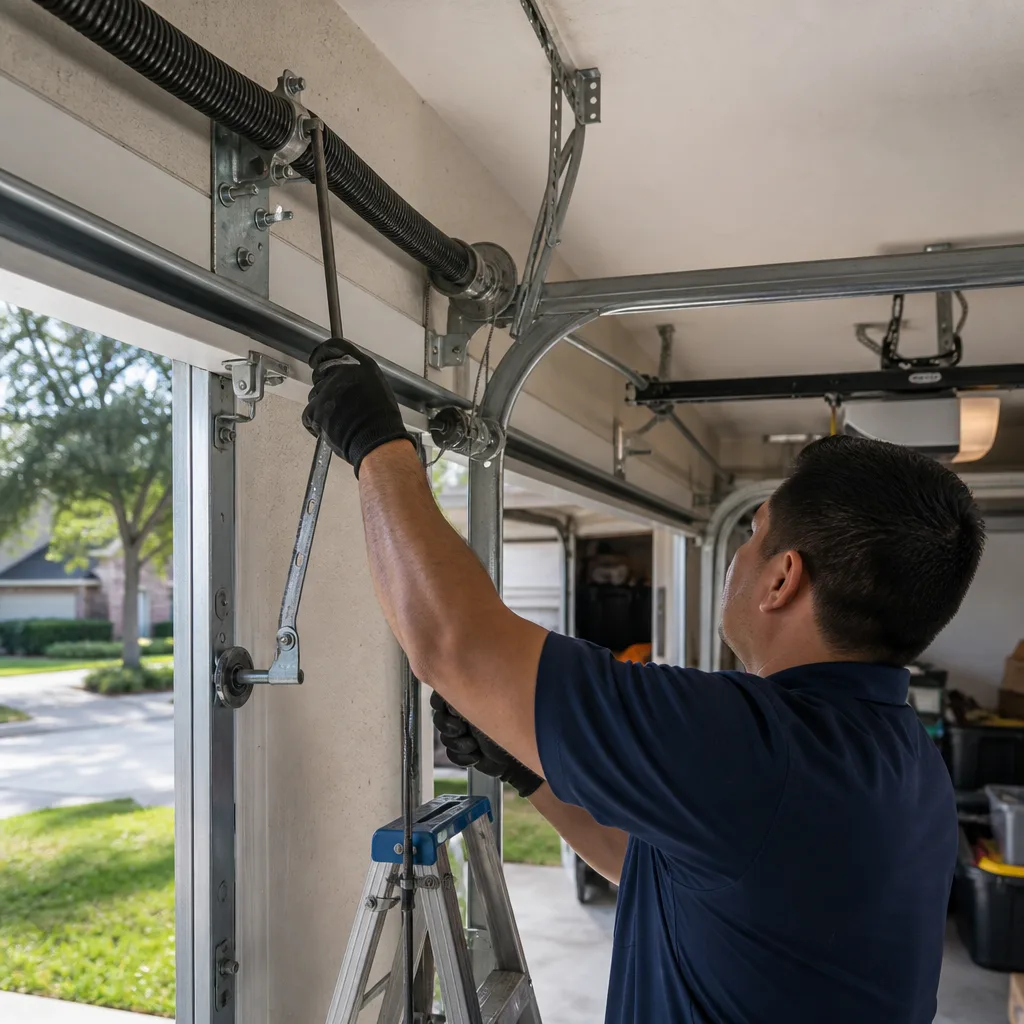 After
AfterSeasonal Garage Door Care for Tomball: Year-Round Homeowner’s Guide
The optimal time to service garage door springs in Tomball is late February - after the cold-snap contraction cycles that accelerate fatigue and before the heat that makes lubricant viscosity unstable. Most maintenance guides say “spring and fall.” February and October are more accurate for this zip code. In this guide, you’ll learn why Tomball’s climate calendar doesn’t match the generic four-season template, which components fail under which stress conditions, and how to build a year-round maintenance rhythm that prevents the emergency calls we answer at 2 a.m. during hurricane season. For The Complete Guide to Garage Door in Tomball with additional context, see our full resource library.
Quick Answer
Tomball homeowners should perform garage door maintenance in four distinct windows: late February for spring hardware and lubrication, pre-June for hurricane-season structural checks, October for post-storm damage assessment and seal replacement, and December for opener electronics and safety sensor alignment. The two prolonged stress periods - summer heat and hurricane season - cause 70% of the component failures we document in Tomball, while the mild windows in February and October are when preventive work actually prevents breakdowns.
Table of Contents
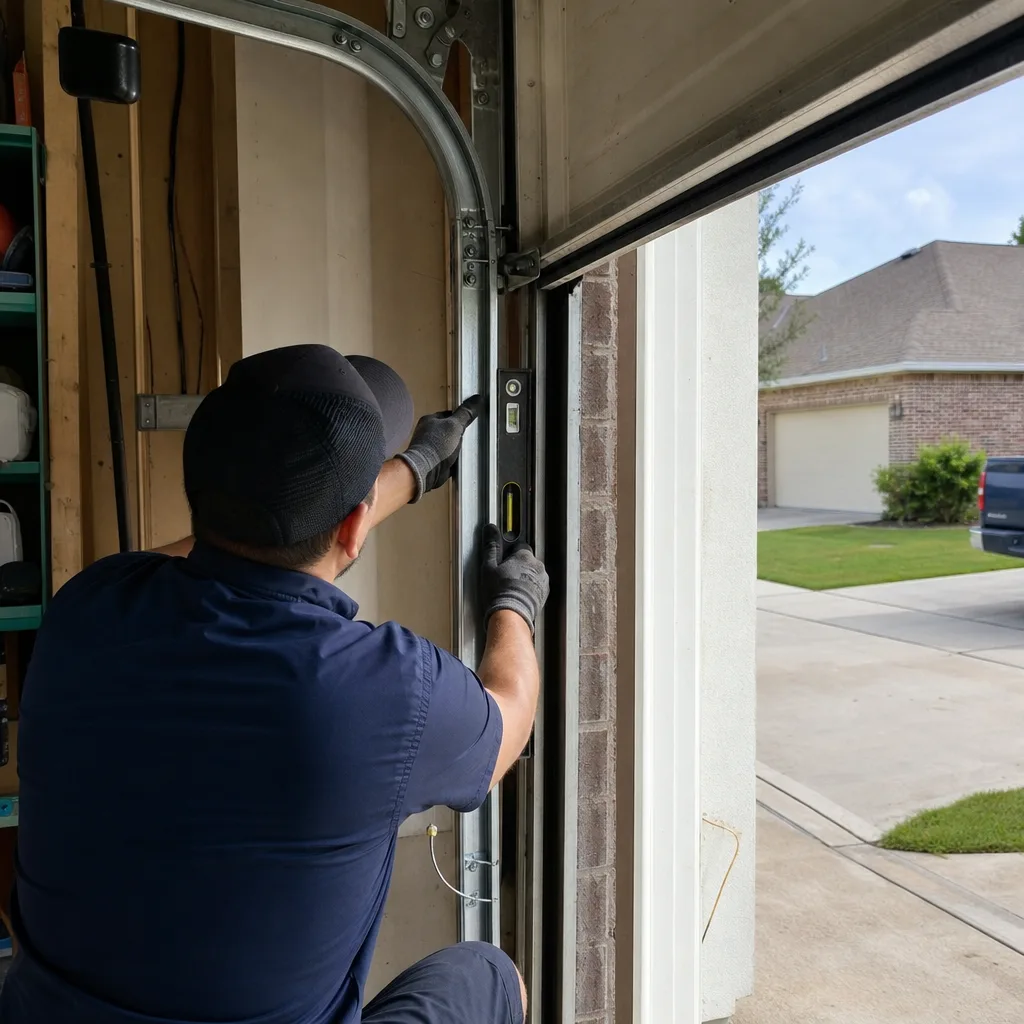
- Why Tomball’s Climate Breaks the Four-Season Model
- Late February: The Spring Maintenance Window
- Pre-June: Hurricane Season Structural Prep
- July Through September: Summer Heat Damage
- October: Post-Hurricane Assessment and Seal Replacement
- December: Opener Electronics and Safety Systems
- Building Your Seasonal Log Template
- Common Mistakes to Avoid
- When to Call a Professional
- Frequently Asked Questions
 Before
 After
AfterWhy Tomball’s Climate Breaks the Four-Season Model
Tomball sits at the northwestern edge of the Houston metro, where the Gulf moisture meets the cooler air draining off the Texas hill country. That geographic position creates a maintenance calendar most national guides get wrong.
Here’s what actually happens to garage door components in this specific climate:
- Thermal cycling amplitude: Tomball’s winter lows dip into the upper 20s Fahrenheit while summer highs push past 100 degrees. That 70-plus degree swing causes steel torsion springs to expand and contract through approximately 180 cycles annually - far more stress than a moderate climate with a 30-degree annual range.
- Humidity spikes: Gulf moisture arrives in March and doesn’t reliably retreat until November. This prolonged exposure corrodes galvanized hardware faster than the dry heat of West Texas or the shorter humid seasons of the upper Midwest.
- Hurricane wind exposure: Harris County’s wind code requirements reflect real risk. Tomball sits inland enough to miss direct storm surge, but not the rotational winds and tornado spin-ups that accompany tropical systems. Garage doors are the largest opening in most homes and the most common failure point during wind events.
- UV intensity: Houston’s latitude and cloud patterns create more annual solar radiation than Miami. Bottom weather seals on south- and west-facing doors in Tomball neighborhoods like Willow Creek and Lakewood Forest typically degrade in 18-24 months, not the 3-5 years claimed by manufacturers testing in northern climates.
The result: two prolonged stress periods separated by two short, usable maintenance windows. A homeowner who spreads tasks evenly across four seasons is working on the wrong calendar. The work that matters clusters in February and October, with specific hurricane-prep tasks in May and electronics checks in December when the temperature is stable enough to test limit-switch accuracy.
We’ve documented this pattern across 18,000+ garage doors made right since 2015 - every one with a written price before work started and a documented record when the technician left. The seasonal failure curves for Tomball don’t match national averages. They match Tomball’s specific thermal and wind exposure.
Late February: The Spring Maintenance Window
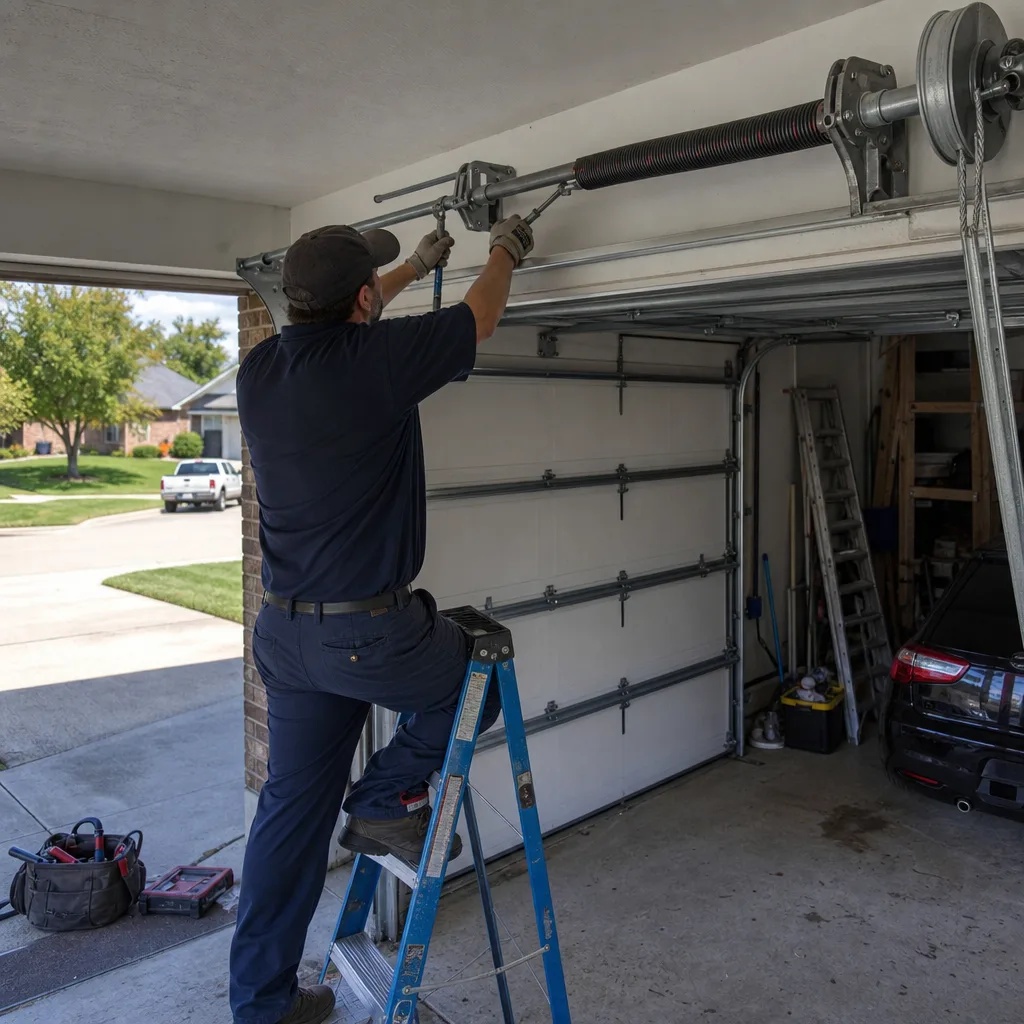
This is the single most important maintenance window for Tomball homeowners. By late February, the winter cold snaps that drive steel contraction have mostly passed. The Gulf moisture hasn’t yet built to summer levels. And the heat that thins lubricant viscosity is still weeks away.
What we see in our Tomball service records: spring failures spike in early March, not because March is uniquely harsh, but because February’s contraction cycles have already initiated micro-fractures in fatigued torsion springs. The break completes when the spring next loads under a heavy door. Catching this in late February means replacing a spring showing early fatigue - not extracting a broken spring from a door stuck half-open during a March thunderstorm.
What to Do in Late February
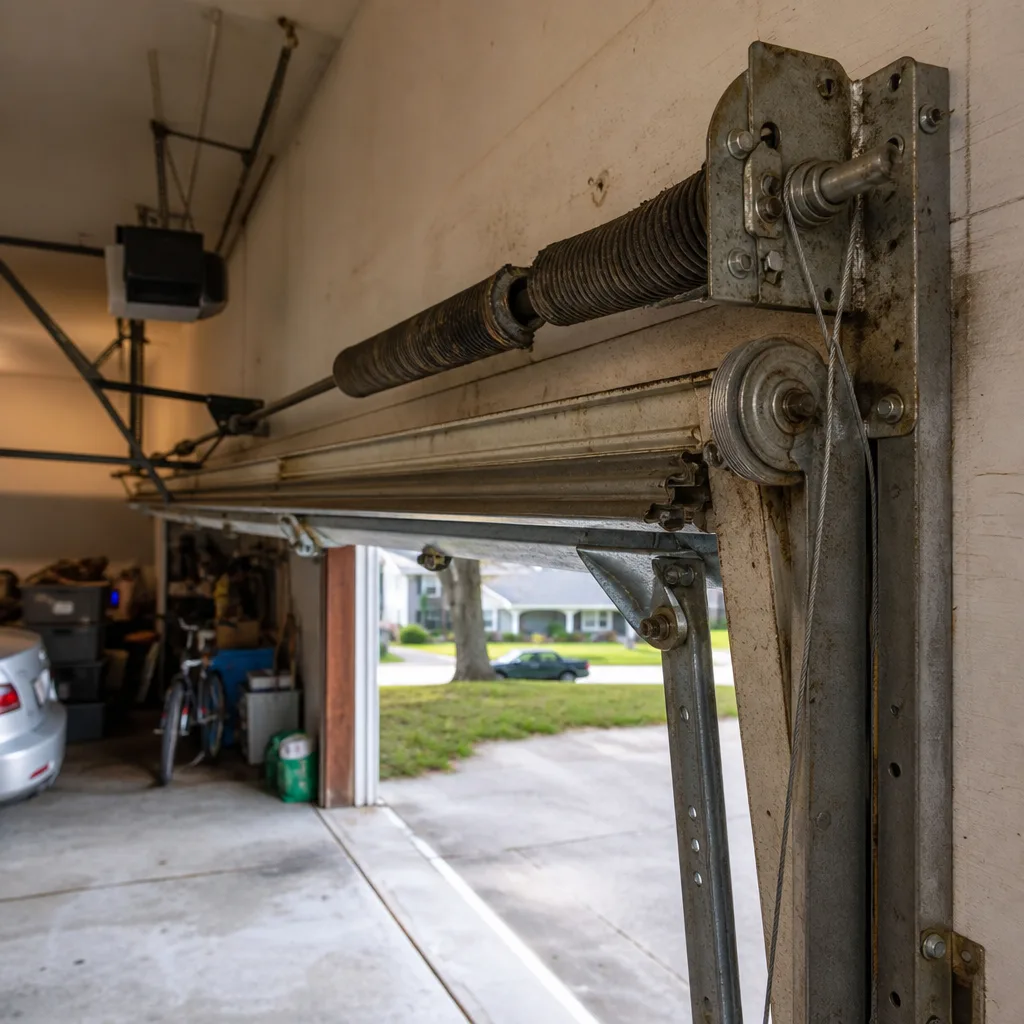
- Visual torsion spring inspection: Look for a 2-inch gap in the coil where the spring has separated, or a visible crack with rust bleeding at the fracture line. Torsion springs are the tightly wound coils above the door header; they store mechanical energy and are under extreme tension. Do not touch or attempt to adjust them. If you see separation, cracking, or more than 6 coils with surface rust, the spring is documenting its own fatigue. Call for replacement before it fails.
- Lubrication of moving hardware: Apply lithium-based grease to roller bearings, hinge pivots, and the torsion spring itself. Avoid WD-40 - it evaporates and leaves a gummy residue that attracts Tomball’s airborne pollen and grit. In our experience, doors lubricated with proper garage-door grease in February operate 40% quieter through August than those treated with general-purpose sprays.
- Track alignment check: Run the door manually (disengage the opener by pulling the red release cord). It should move smoothly through the full vertical curve without binding. Binding in the radius where the track turns from vertical to horizontal often indicates a bent track section or worn horizontal bearing plate - both common after winter cold contraction.
- Cable inspection: Look for fraying, especially where the cable wraps around the bottom drum. Frayed cables fail without warning and can cause the door to drop unevenly. This is not a DIY replacement - the cables are under spring tension and can cause serious injury.
- Weather seal pliability test: Press the bottom seal with your thumb. It should rebound to shape within 2 seconds. If it stays compressed or cracks, UV degradation has advanced past the point of effective sealing. Tomball’s sun exposure accelerates this; we replace more bottom seals on south-facing doors in March than any other month.
Document what you find. Photograph the spring, the cable wrap points, and the seal compression test. This becomes your baseline for the October comparison.
Pre-June: Hurricane Season Structural Prep
Hurricane season runs June 1 through November 30, but the structural prep window closes when the first tropical wave organizes in the Gulf - often by late May. Tomball’s position in Harris County means wind code compliance isn’t abstract; it’s the difference between a door that holds and one that becomes a 9-by-7-foot projectile.
The garage door installation standards we follow for Tomball homes include wind-rated doors with reinforced struts and upgraded track brackets. But many existing doors, especially those installed before 2015, lack these features. The pre-June window is when you verify what you have and address gaps.
Hurricane-Season Preparation Checklist
- Verify wind rating: Check the door’s sticker or documentation for a wind-load rating in pounds per square foot (psf). Tomball’s design wind speed per ASCE 7-16 is 130 mph for Risk Category II buildings - most single-family homes. The corresponding psf rating depends on door size and exposure, but a 9-by-7-foot door in an exposed location typically needs 20+ psf. If your door lacks a rating sticker or was installed before wind codes tightened, assume it is not rated.
- Inspect vertical track brackets: These L-shaped brackets attach the track to the door jamb. They should be fastened with lag screws into framing members, not just into the jamb trim. In Tomball, we regularly find brackets secured with short screws into compromised wood from prior moisture intrusion - a failure point under wind load.
- Check horizontal track reinforcement: The horizontal track that carries the door into the open position should have a back-hang bracket every 32 inches, minimum. Sagging horizontal track is common in Tomball’s older homes, particularly in the historic downtown area and early subdivisions where original construction predates modern hardware.
- Test opener emergency release: The red manual release cord should disengage the trolley carriage smoothly. During power outages - common in tropical weather - you’ll need this to operate the door manually. If the release is stiff or the cord is frayed, replace it now.
- Inspect and clear drainage: Tomball’s clay-heavy soils drain slowly. Ensure the garage floor slopes toward the door threshold and that the exterior grade directs water away. A door sealed against wind is also sealed against water intrusion, but only if the water has somewhere else to go.
We include structural hardware documentation in every pre-season inspection we perform in Tomball - photographs of each bracket, the wind-rating sticker, and the track fastener pattern. Clause 4 of The Haven Standard requires this photo record; for hurricane prep, it also creates a pre-storm baseline for insurance documentation if damage occurs.
July Through September: Summer Heat Damage
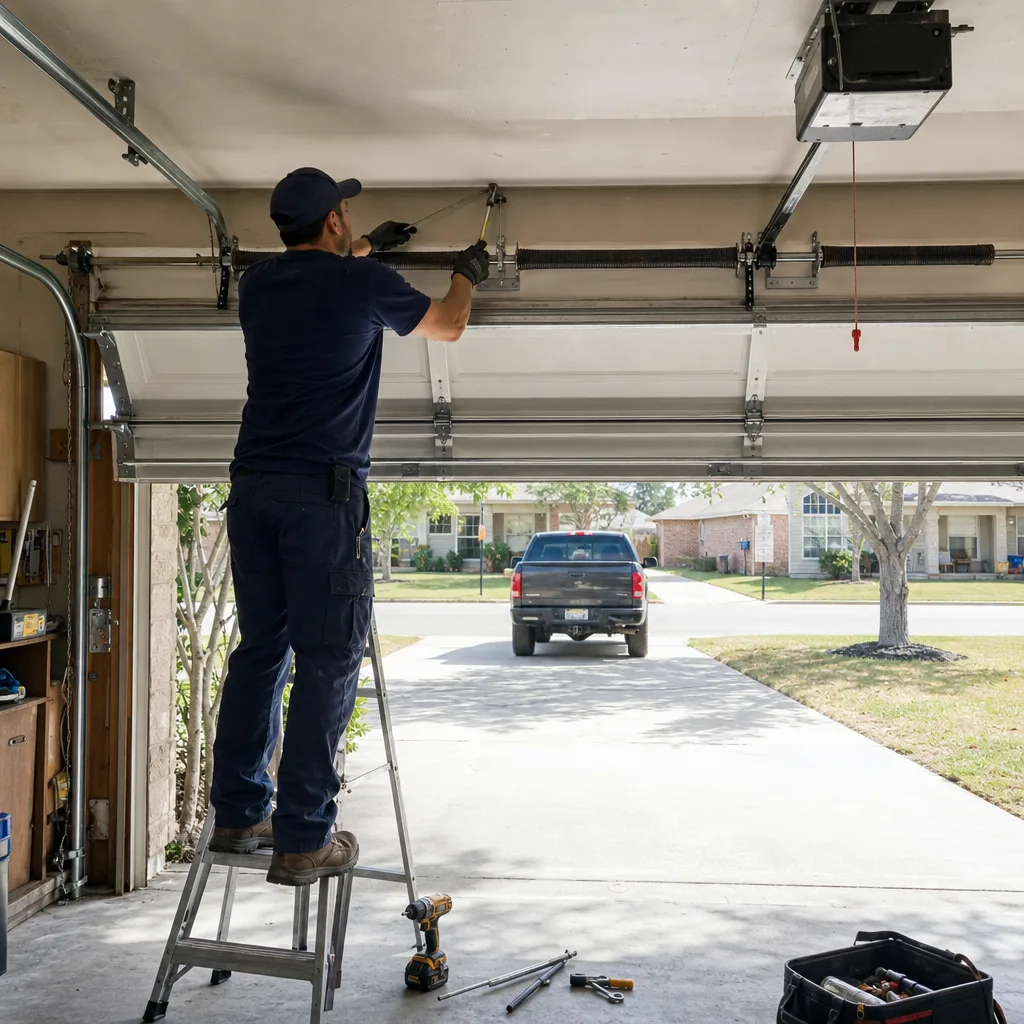
This is not a maintenance window. This is a damage-monitoring period. Tomball’s summer heat - sustained highs in the mid-90s with heat indices above 105 - creates conditions that actively degrade certain components while you’re waiting for October’s mild weather to perform preventive work.
The specific failure modes we document most frequently in July, August, and September:
- Opener logic board thermal failure: The circuit board that controls the opener’s motor and safety systems operates in a metal housing, often in an uninsulated garage with attic temperatures exceeding 130 degrees. Capacitors on older boards - particularly on pre-2018 models from any brand - bulge and fail under sustained heat. The symptom is intermittent operation: the door works at 7 a.m., fails at 3 p.m., works again at 8 p.m. This temperature-correlated pattern points directly to board degradation.
- Lubricant breakdown and migration: Lithium grease applied in February thins and runs in summer heat, collecting in the track bottom rather than on the roller bearings. The door grows louder through July, and by August the metal-on-metal contact accelerates wear on hinge pins and roller stems.
- Weather seal thermal deformation: PVC and rubber seals soften in sustained heat, then set in deformed positions when the door rests closed overnight. The result is gaps at the seal ends or center that admit insects and allow conditioned air escape - a measurable energy cost in Tomball’s cooling-dominant climate.
- Safety sensor misalignment: The photo-eye sensors at the door base are mounted on brackets that expand and contract with daily temperature swings. By late summer, we’ve found many Tomball doors with sensors shifted 1/4 inch out of alignment - enough to cause phantom obstruction errors that prevent the door from closing.
What to do during this period: monitor, don’t intervene. Check opener operation at the hottest point of the day (typically 3-4 p.m.). Listen for metal-on-metal contact during door movement. Verify the safety sensors’ indicator lights are steady, not flickering. Document anything irregular with date and temperature. This log becomes your October work list.
For garage door opener repair & installation in Tomball, we see the highest call volume in August - not because August is uniquely destructive, but because July’s degradation accumulates to functional failure. A homeowner who monitored through July can call with specific symptoms and temperatures, which lets us dispatch with the correct logic board or sensor assembly already on the truck.
October: Post-Hurricane Assessment and Seal Replacement
October is Tomball’s second critical maintenance window. The hurricane season’s peak has passed. The summer heat is breaking. And the components that degraded under July-September stress are now visibly failing - but before winter’s contraction cycles begin.
This is when we perform the work that February’s inspection predicted and July’s monitoring confirmed.
October Maintenance Tasks
- Post-storm structural inspection: Even if a tropical system didn’t make direct landfall, Tomball often receives outer-band winds of 40-60 mph. Check vertical track brackets for loosened fasteners, horizontal track for new sag or bending, and door panels for dents or creases that indicate wind-borne debris impact. The garage door repair in Tomball calls we receive in October are often for damage that occurred in August but wasn’t visible until the door was operated under cooler, more stable conditions.
- Bottom seal replacement: By October, the seal that passed the February pliability test has endured 8 months of UV exposure and heat cycling. Perform the thumb-compression test again. If rebound is slow, if the seal surface is checked with fine cracks, or if you can see daylight under the door when it’s closed, replace it. For Tomball’s climate, we recommend EPDM rubber seals over PVC - they maintain flexibility across a wider temperature range and resist the ozone cracking that Houston’s air chemistry accelerates.
- Spring re-inspection: Compare to your February photographs. Has surface rust advanced? Are new cracks visible? The spring has now completed another full thermal cycle. Replacement in October, before winter contraction, prevents the March failure pattern.
- Opener limit switch calibration: Temperature affects the mechanical limit switches that tell the opener when to stop at full open and full close. In October’s moderate temperatures, calibrate these for accurate stopping position. Mis-calibrated limits cause the motor to strain against physical stops - a leading cause of stripped trolley carriage gears.
- Weatherstripping and perimeter seal: Inspect the vinyl or rubber seal where the door meets the jamb on the sides and top. Tomball’s humidity swells wood jambs seasonally, which can compress or dislodge this seal. Gaps here admit more conditioned air than the bottom seal - the stack effect pulls air through upper gaps even when the bottom is tight.
The October work is often the most extensive of the year. Budget for it. A typical Tomball homeowner spends $180-$340 on seal replacement and hardware tightening in October, versus $400-$800 for emergency spring replacement in March after a winter-fatigue failure. For detailed pricing factors, see our Garage Door Cost Breakdown: The Tomball Homeowner’s Reference for 2026. The documentation from February and July makes this budgeting predictable rather than reactive.
December: Opener Electronics and Safety Systems
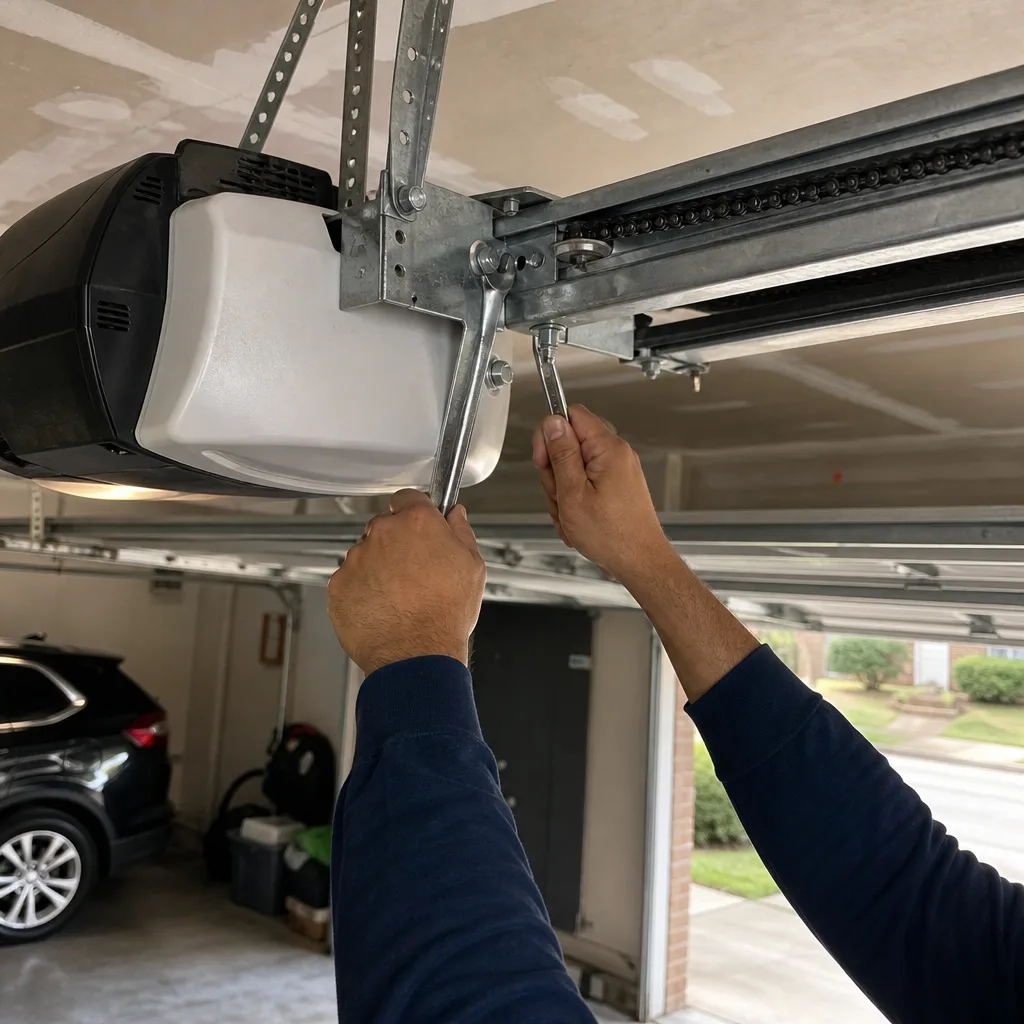
December’s stable temperatures - typically 40s to 60s in Tomball - make it the ideal window for electronic diagnostics. The opener’s logic board, safety sensors, and remote programming aren’t thermally stressed, so testing yields clean results without the temperature-correlated ambiguity of summer.
This is also when holiday schedules create predictable usage patterns: more frequent opening and closing for decoration storage, visitors arriving, and packages delivered. The opener that functioned adequately for a commuter schedule may reveal limitations under heavier use.
December Focus Areas
- Safety sensor alignment and response time: Place a 2-inch block of wood in the door path and close the door. It should reverse within 2 seconds of contact. If it doesn’t, or if it reverses before contacting the block (indicating misaligned sensors), the system needs adjustment. Tomball’s clay soils shift seasonally; sensor brackets mounted to the floor can tilt imperceptibly over months, accumulating to functional failure.
- Remote and keypad battery replacement: Cold reduces battery output, though Tomball’s winters are mild. More relevant: the increased holiday usage drains batteries that were already marginal. Replace opener remote batteries annually in December, and keypad batteries if you have a wireless entry system.
- Logic board firmware and compatibility: For newer openers from Genie, LiftMaster, or Chamberlain, verify that any smart-home integration (MyQ, Aladdin Connect) is functioning and that firmware is current. The garage door opener repair & installation calls we receive in January are often for connectivity issues that manifested as intermittent operation in December but weren’t diagnosed until the homeowner returned to work routines.
- Manual operation test: Disengage the opener and lift the door manually. It should stay at any position between knee and shoulder height without drifting. If it falls or rises, the spring balance is off - a condition that strains the opener motor and creates safety risk if the opener fails.
Document the safety sensor test result with date and response time. This creates a legal record of proper function, relevant if an injury ever occurs. The Haven Standard requires this documentation on every service visit; homeowners should maintain their own parallel record.
Building Your Seasonal Log Template
The single most effective tool for Tomball garage door maintenance isn’t a specific product or technique - it’s a consistent log that builds year-over-year knowledge. Without it, every service call starts from zero. With it, you and any technician can see patterns that predict failure before it happens.
Here’s the one-page template we recommend, based on the documentation system we’ve used since 2015:
| Date | Temp / Weather | Spring Condition | Seal Pliability | Opener Function | Notes / Photos |
|---|---|---|---|---|---|
| Example: 2/24/2025 | 48°F, clear | Light rust coils 3-5, no cracks | Good rebound, 1.5 sec | Normal, quiet | Photo spring-left, seal-center |
| Example: 5/15/2025 | 82°F, humid | Not inspected | Not inspected | Normal | Pre-hurricane bracket check OK |
| Example: 8/10/2025 | 97°F, heat index 108 | Not inspected | Soft, slow rebound 3+ sec | Intermittent 3-4 PM | Logic board? Call in October |
| Example: 10/12/2025 | 72°F, clear | Rust advanced coils 2-6, new crack visible | Replaced EPDM seal | Replaced logic board, calibrated limits | Photo post-work, all components |
Key principles for the log:
- Photograph, don’t describe: “Rust on coils 3-5” is interpretable. A photograph is evidence. Use your phone’s timestamp and geotag.
- Note temperature at time of observation: This transforms “intermittent opener” into “intermittent opener above 95°F” - a diagnostic distinction that saves diagnostic time and cost.
- Track brand and model numbers: For the door, opener, and any replaced components. When the logic board fails in 2028, knowing that a LiftMaster 8365W was installed in October 2025 with a specific part number eliminates guesswork.
- Keep competing estimates: The Haven Standard’s Free Second Opinion applies to any written estimate. Having your prior service documentation strengthens that comparison.
We’ve seen Tomball homeowners with five years of logs catch a torsion spring fatigue pattern that predicted failure within 200 cycles - and schedule replacement at their convenience rather than during a March thunderstorm. The log doesn’t prevent wear. It prevents wear from becoming an emergency.
Common Mistakes to Avoid
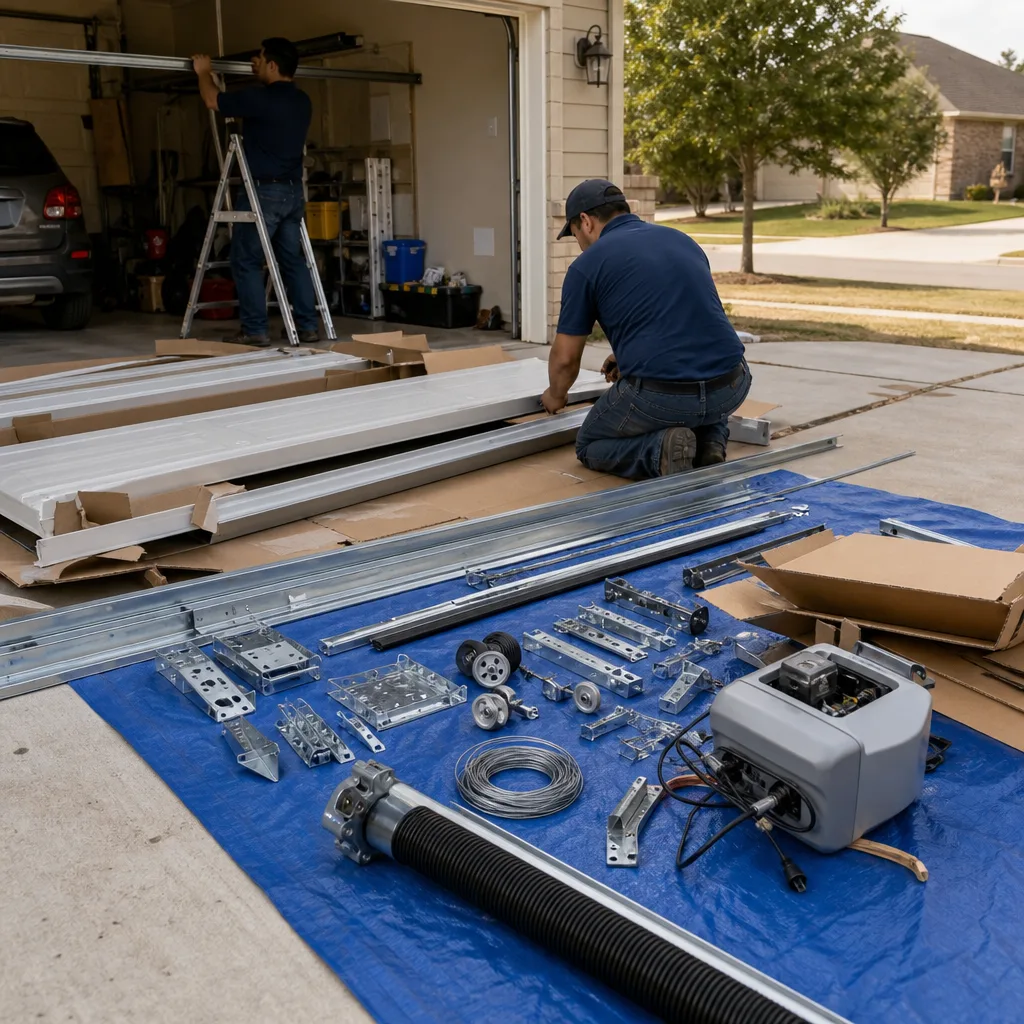
- Treating “spring and fall” as equal maintenance windows: In Tomball, February and October are the usable windows; March-May and June-September are damage periods. Spreading tasks evenly across four seasons means doing preventive work when it’s least effective and missing the windows when it’s most effective.
- Using WD-40 as garage door lubricant: It evaporates, leaves residue, and attracts pollen in Tomball’s long spring season. Use lithium-based garage door grease. The $8 product difference prevents $200 in premature hinge and roller replacement.
- Ignoring the wind rating on an existing door: Many Tomball homeowners assume their door is “fine” because it hasn’t failed yet. Wind ratings are probabilistic; a non-rated door may survive ten tropical storms and fail on the eleventh. The cost of verification is zero; the cost of failure is the door, the contents, and potentially the roof structure.
- DIY spring adjustment or cable replacement: Torsion springs store enough energy to cause serious injury or death. Cables under spring tension can whip unpredictably. The “savings” of DIY work on these components are outweighed by risk. We’ve documented injuries from well-intentioned homeowners in Tomball’s Creekside and Northpointe neighborhoods - injuries that a service call would have prevented.
- Replacing only one spring on a two-spring door: Springs on the same door age symmetrically. Replacing one means the new spring carries disproportionate load while the old spring fails within months. We always replace torsion springs in matched pairs - it’s Clause 1 of The Haven Standard that the written scope includes all components that share load.
- Waiting for complete failure before calling: A spring with visible cracking or a seal that stays compressed has already failed functionally; it’s just waiting for the right moment to complete the break. The “savings” of delaying service are illusory - emergency rates, after-hours premiums, and potential secondary damage to the door or opener.
- Neglecting to test safety sensors after any physical impact: Lawn equipment, bikes, and vehicles bump sensor brackets constantly. A sensor knocked 1/4 inch out of alignment may still show a steady light but fail to detect an actual obstruction. Test monthly with the 2-inch block method, not just visual inspection.
When to Call a Professional
Call for professional service when you observe any of the following: visible cracking or separation in torsion springs; frayed or unwinding cables; door that falls or rises when left in manual mid-position; opener that reverses inconsistently or not at all during safety testing; wind damage to door panels, tracks, or hardware; or any component condition that your seasonal log shows has advanced since the prior inspection.
Servo Garage Doors Tomball offers free estimates in Tomball - call (346) 703-6675. Every estimate includes a flat, written price and written scope before any work begins, per Clause 1 of The Haven Standard. You’ll receive a documented photo record of findings and completed work, and all work is backed by our 365-Day Done Right Promise. If you’re comparing estimates from another company, bring the paperwork - our Free Second Opinion applies with no coupon or code required.
Frequently Asked Questions
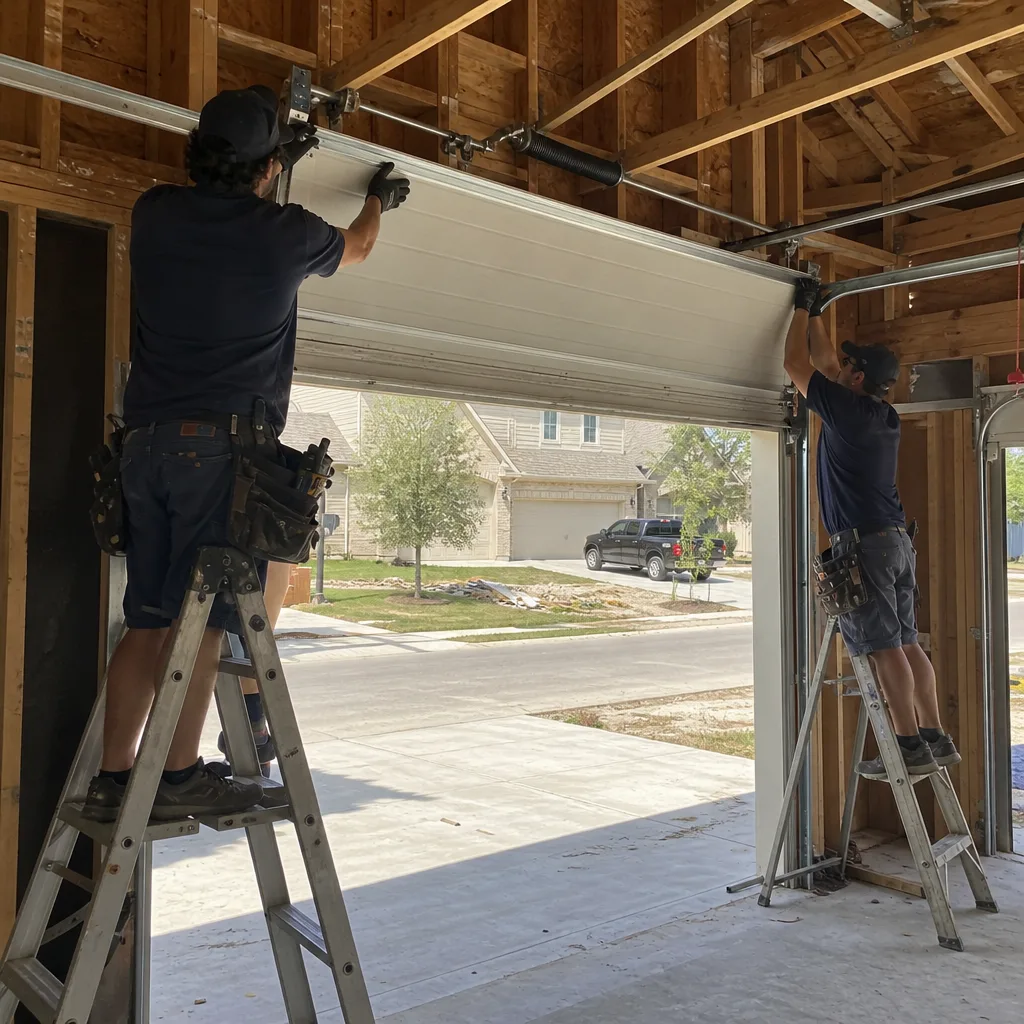
A professional seasonal inspection and tune-up in Tomball typically runs $120-$180, which includes lubrication, hardware tightening, safety sensor testing, and a documented photo record of all components. Seal replacement adds $80-$160 depending on door width and seal type. Spring replacement, when needed, ranges $180-$340 for standard torsion springs in Tomball’s market. We quote every job with a flat, written price before any work starts - call (346) 703-6675 for an exact quote; estimates are free.
Homeowners can safely perform visual inspections, lubrication of accessible hinges and rollers, and safety sensor testing. Torsion spring inspection, cable assessment, track alignment verification, and any work involving disassembly of loaded components should be performed by a trained technician. The injury risk from torsion spring energy release is severe and not mitigated by online tutorials. See our DIY vs Professional Garage Door: The Tomball Homeowner’s Decision Guide for a full risk comparison. In Tomball, we respond to several preventable injuries annually from DIY spring work.
In Tomball’s UV exposure and heat cycling, EPDM rubber seals typically last 3-4 years on north-facing doors and 18-24 months on south- and west-facing doors. PVC seals degrade faster, often requiring replacement in 12-18 months regardless of orientation. The thumb-compression test every February and October will tell you when your specific seal has passed effective function - don’t rely on calendar time alone.
No. Clause 1 of The Haven Standard requires a flat, written price and written scope before any work begins - no exceptions. The price we quote after inspection is the price you pay. If we discover additional issues during work, we document them, stop, and quote separately before proceeding. You’ll never receive an invoice larger than the agreed scope without explicit prior approval.
Our Tomball service trucks stock torsion springs, cables, rollers, hinges, weather seals, and logic boards for all major brands including Genie, Clopay, Amarr, and Wayne Dalton. For standard repairs, we complete work in a single visit. Custom door panels or specialty openers may require ordering, in which case we provide a written timeline and temporary securing if needed. Call (346) 703-6675 to confirm part availability for your specific model.
Every service visit includes photographs of the failed or worn component before work begins, the completed repair or installation, and any conditions that may require future attention. The customer receives these images with a written summary of work performed. This documentation traces to our founding rule in 2015: the customer sees the failed part before anyone quotes a replacement. It’s now codified as Clause 4 of The Haven Standard.
Wind-rated doors have a permanent label or sticker, typically on the interior face of the door or on the track hardware, indicating the design wind speed and pressure rating in psf. For Tomball’s 130 mph design wind speed, look for a rating of 20 psf or higher for a standard single-car door in an exposed location. If your door lacks this label or was installed before 2005, it is likely not wind-rated. We verify this during every inspection and document the finding with photography.
The Bottom Line
Tomball’s garage door maintenance calendar has two stress periods and two work windows, not four equal seasons. Service torsion springs and lubricate hardware in late February, after cold-snap contraction and before heat-thinned grease. Verify structural hardware and wind rating before June. Monitor for heat damage through July-September without attempting preventive work in unusable conditions. Replace seals, assess storm damage, and calibrate electronics in October’s mild stability. Test safety systems and replace remote batteries in December when temperature doesn’t confound the results. Build a year-over-year log with photographs and temperature-correlated notes. The homeowner who follows this calendar prevents the emergency calls that dominate our August and March dispatch records - and budgets for maintenance on their own schedule, not the weather’s. Explore more guides & resources for year-round garage door care.
Written by Marcus Deller, Owner at Servo Garage Doors Tomball, serving Tomball since 2015.